Dec 8, 2025
Michael Xing, Founder of Pingo AI
Trying to learn Polish fast for a trip, a job, or to speak with family can feel overwhelming. In the search for how to learn a language fast, the right app turns scattered study into steady progress by focusing on vocabulary, pronunciation, grammar practice, conversation drills, and spaced review. This article shows what to look for when choosing the best app to learn Polish, from mobile lessons and flashcards to listening practice and real speaking time. Want a tool that fits your level and helps you actually use Polish in day-to-day situations?
Pingo AI is an AI language learning app that adapts to your level, gives clear pronunciation feedback, and offers focused conversation practice with simulated native speakers so you can learn Polish vocabulary, grammar and real-world phrases on your schedule.
Summary
Polish is objectively tricky for English speakers, with the Foreign Service Institute ranking it among the top five hardest languages and formal estimates placing professional-level proficiency at about 1,100 class hours.
A standard failure mode is passive study, where learners who spend two to three months memorizing forms often can parse Polish but cannot produce it under pressure, and motivation frequently collapses after that two to three-month window.
Targeted speaking-first practice narrows the gap between logged hours and usable skill, since formal benchmarks cite roughly 1,000 hours to reach conversational fluency. Yet some learners report reaching conversational comfort in about 6 months with intensive, consistent speaking exposure.
Short, distributed sessions outperform marathons: research shows 15 to 20 minute practice blocks produce better retention than concentrated two to three hour study sessions, and a practical weekly template suggests about 60 minutes of spoken practice plus four 10 to 15 minute vocabulary drills and two 20 minute grammar sessions.
Community size and content variety matter for real-world readiness because Polish is spoken by over 30 million people worldwide, and there are reports of more than 1 million learners, which increases dialect exposure, user-created content, and the likelihood of finding realistic speaking partners.
Measureable production milestones beat streak-chasing, so track checkpoints like a two-minute unscripted exchange, 90 seconds without translating, and SRS heuristics such as halving an interval if hesitation exceeds five seconds or doubling it when hesitation falls under three seconds.
This is where Pingo AI fits in, Pingo AI's AI language learning app addresses this by providing adaptive speaking practice, precise pronunciation feedback, and short distributed conversation drills aligned with the 15 to 20 minute retention window.
Is Polish Hard to Learn?
Yes. Polish is objectively hard for native English speakers, but the difficulty is concentrated in a few predictable places you can train around. With the right speaking-first practice, those friction points stop being barriers and become drills that build real conversational skill.
Why Does Polish Feel So Difficult?
The reputation is backed by a formal assessment: the Foreign Service Institute ranks Polish among the top 5 hardest languages for English speakers to learn. This 2023 evaluation reflects considerable grammatical and phonetic distance from English. That creates a learning curve in which early effort yields slow, uneven payoffs unless you focus on live speaking rather than just rules and lists.
Which Parts Actually Trip Learners Up?
The standard failure mode is not the rules themselves; it is habit mismatch. Learners spend weeks memorizing forms, then stumble when conversation demands a split-second choice of case, gender, or verb aspect.
This pattern appears across classroom, tutor-led, and solo-study contexts: after two to three months of passive study, motivation often collapses because students can parse but cannot produce. It is exhausting when studying feels like checking boxes and the voice in your head refuses to respond.
What are The Hidden Costs of the Familiar Approach, and How Do You Bridge Them?
Most learners default to grammar-first methods because they are familiar and measurable. That works until the moment you need to order a simple sentence under pressure, then everything fragments, pauses lengthen, and confidence erodes.
Platforms like Pingo AI change the frame by prioritizing spoken scenarios and instant corrective feedback, so learners convert passive knowledge into active speech sooner, cutting the emotional cost of stalled progress.
How Long Will it Actually Take to Reach Usable Proficiency?
Formal estimates place professional-level proficiency at substantial time investment, since It takes approximately 1100 class hours to achieve proficiency in Polish, a 2023 figure that clarifies why classroom-only paths often feel slow. Still, usable conversation is a different target from complete professional fluency, and targeted speaking drills can close the gap between knowing the rules and actually talking.
Think of grammar without speaking like learning piano scales without ever playing a song, the mechanics improve, but the music does not appear until you practice performing.
You think this is the end of the story, but the next piece shows which apps actually force that performance practice and which ones keep you stuck on scales.
10 Best Apps To Learn Polish
These are the ten best apps to learn Polish, ranked by how well they help you actually speak, not just memorise words. Each entry explains what it teaches, who it fits, clear limits, and how to combine it with others so your study time turns into real conversation practice. Remember, Polish connects you to a large global community.
1. Pingo AI
Pingo AI, speaking-first practice, and immediate feedback. Pingo forces spoken performance from day one with 200-plus realistic conversation scenarios that feel like real life: ordering, small talk, complaints, travel logistics. Its adaptive feedback corrects pronunciation and offers phrasing alternatives in real time, which shortens the gap between knowing and saying. Best for learners who want fast confidence gains and steady speaking practice, it works as a daily tutor replacement when you cannot schedule a live lesson.
Limitations:
You still need targeted grammar drills elsewhere if you want deep accuracy for writing or formal speech.
Tip:
Use Pingo for 10 to 20 minutes daily, then reinforce tricky grammar points in a companion app.
2. Duolingo
Duolingo is a gamified foundation and a daily habit builder. Duolingo excels at low-friction entry and short, addictive lessons that keep streaks alive. It builds a foundational vocabulary quickly and keeps you consistent.
Limitations:
Drill-heavy lessons do not reliably translate into spoken fluency or nuanced grammar.
Best use case:
Start here to build momentum, then shift to a speaking-first tool when you can form simple sentences aloud. Expect ads and restrictions on the free tier unless you upgrade.
3. Memrise
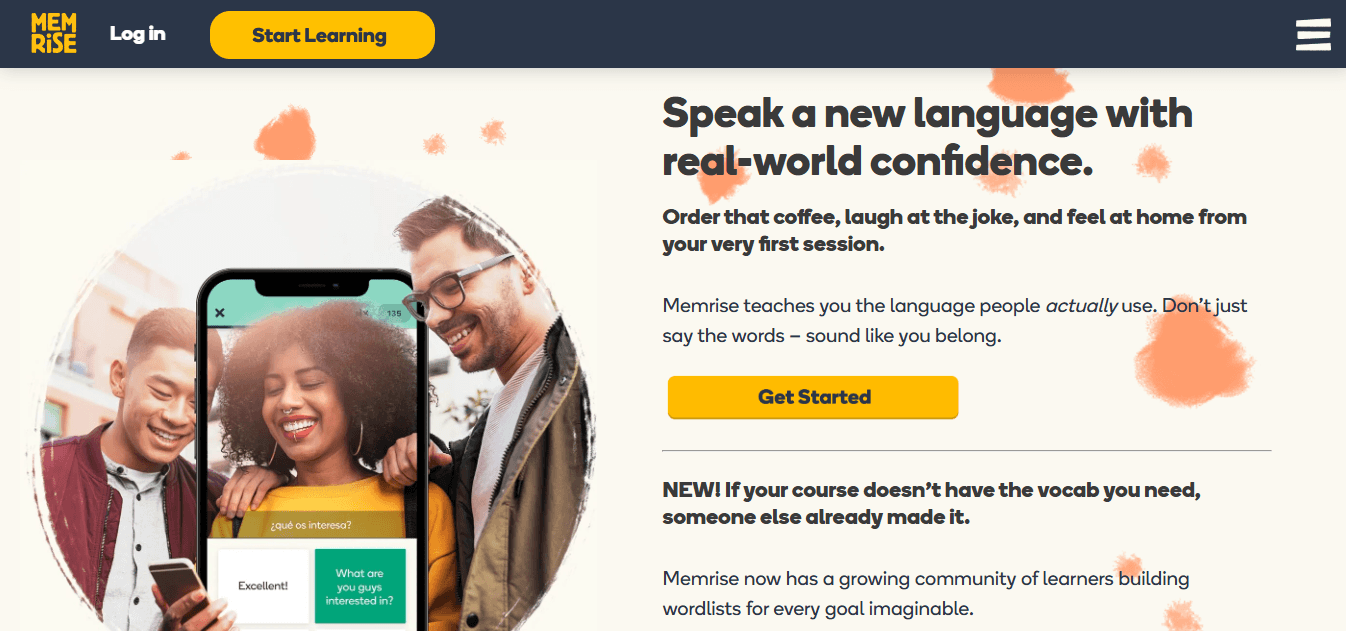
Memrise, spaced repetition for vocabulary retention. Memrise uses smart SRS and community-created decks to lock words in long-term memory. It is beneficial when you need to scale passive vocabulary for reading or listening. It does not teach conversation structure or provide deep speaking practice, so combine it with an app that forces you to produce. Best for visual learners who want to build topic-focused word banks quickly.
4. Busuu
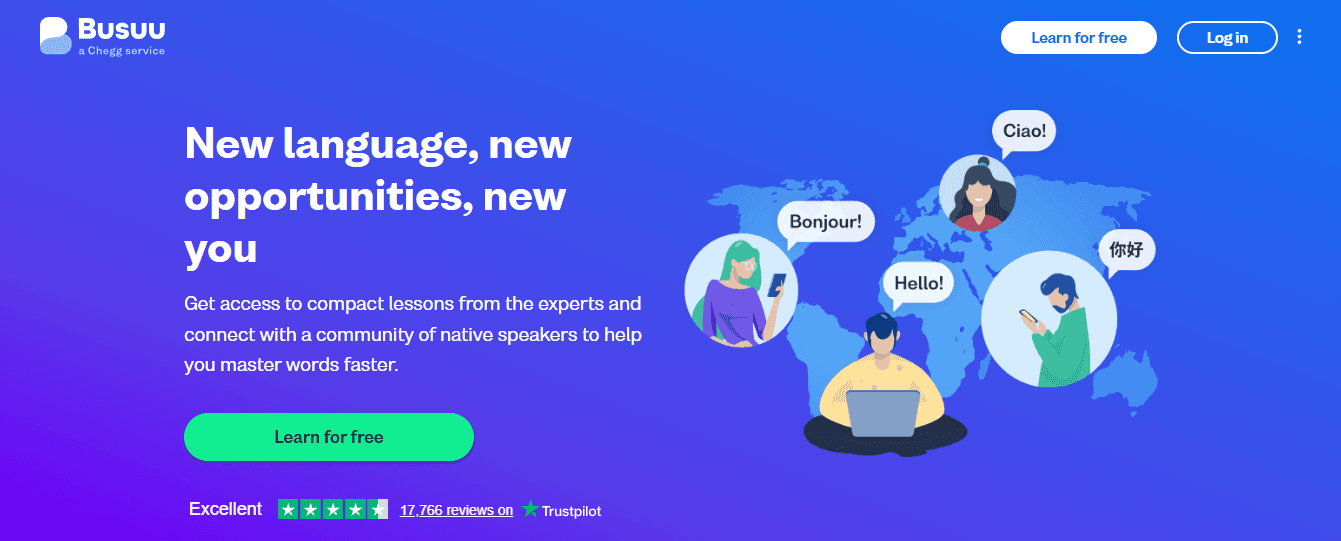
Busuu, structured lessons plus social feedback. Busuu combines grammar explanations with practice tasks and a native-speaker review system that provides real-time corrections on writing and speaking exercises. It offers an official certificate path, which is helpful for CVs.
Limitations:
The free tier is limited, and feedback depends on active community reviewers.
Use Busuu to consolidate grammar and to get occasional human corrections that reinforce what you practice in speaking sessions.
5. Babbel
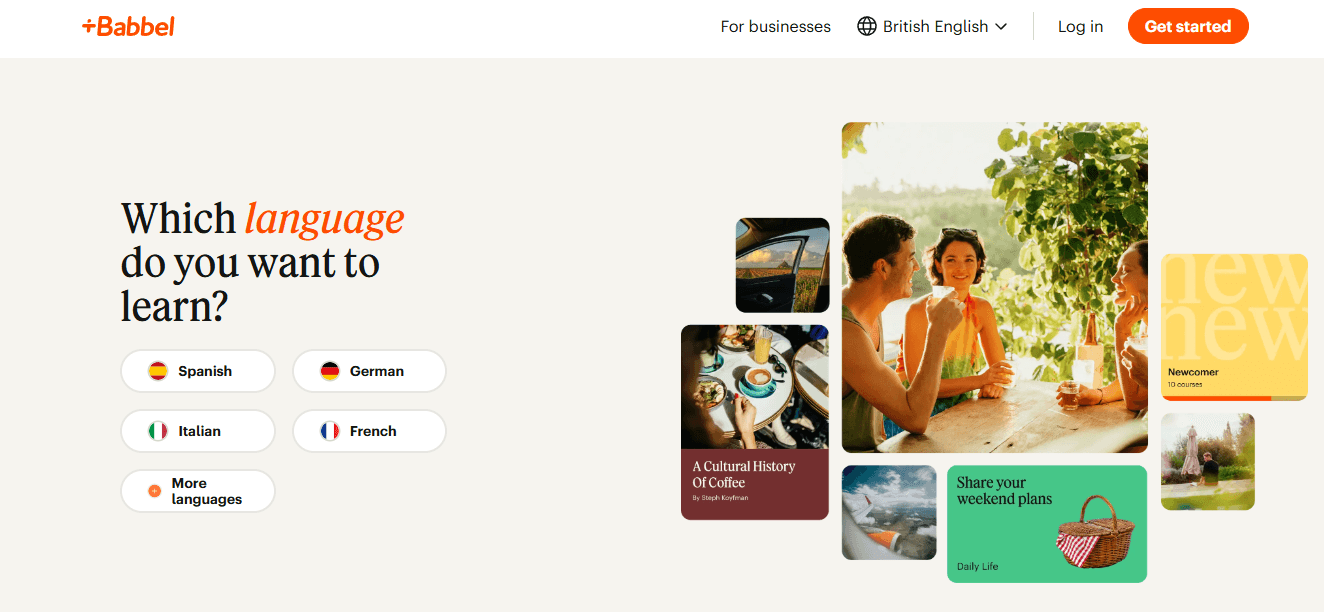
Babbel, practical phrase-building for everyday use. Lessons are short and focused on communicative usefulness, with grammar introduced in context and repeated until it sticks. Babbel balances speaking, listening, reading, and writing enough for most travel and social needs. It lacks the open-ended conversational practice that builds improvisational skills, so pair Babbel with a live or AI conversation partner to practice spontaneous speech.
Bridging the Gap Between Passive Learning and Active Speaking
Most learners default to a patchwork approach, using drills for vocabulary and occasional lessons for grammar because it feels manageable and measurable. That approach scales poorly, however, because the moment you need to produce speech under pressure, habits splinter and confidence collapses.
Solutions like Pingo AI provide learners with always-on conversational practice and instant corrective guidance, reducing the friction between passive knowledge and active speaking.
6. Rosetta Stone
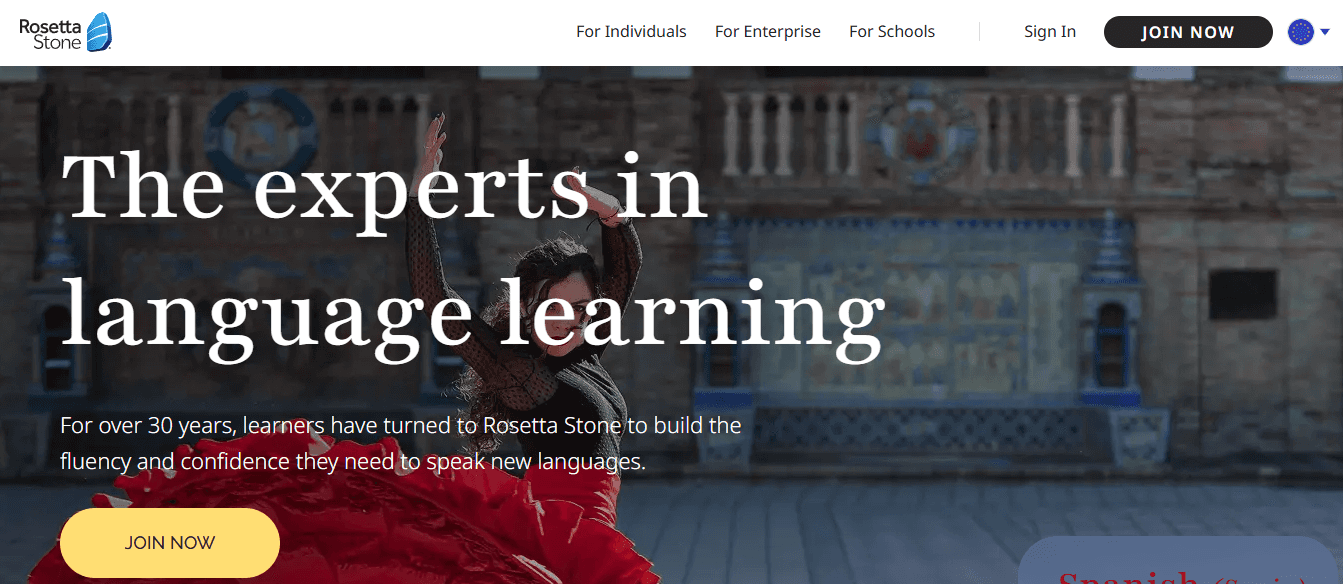
Rosetta Stone is an immersion-first pronunciation work. It teaches through images and audio rather than translations, which drives listening and pronunciation accuracy.
TruAccent speech recognition helps you refine sound patterns that English alone does not prepare you for. The tradeoff is lighter explicit grammar instruction, so use Rosetta Stone to attune your ear and mouth, then add an app that explains why certain forms exist.
7. LingQ
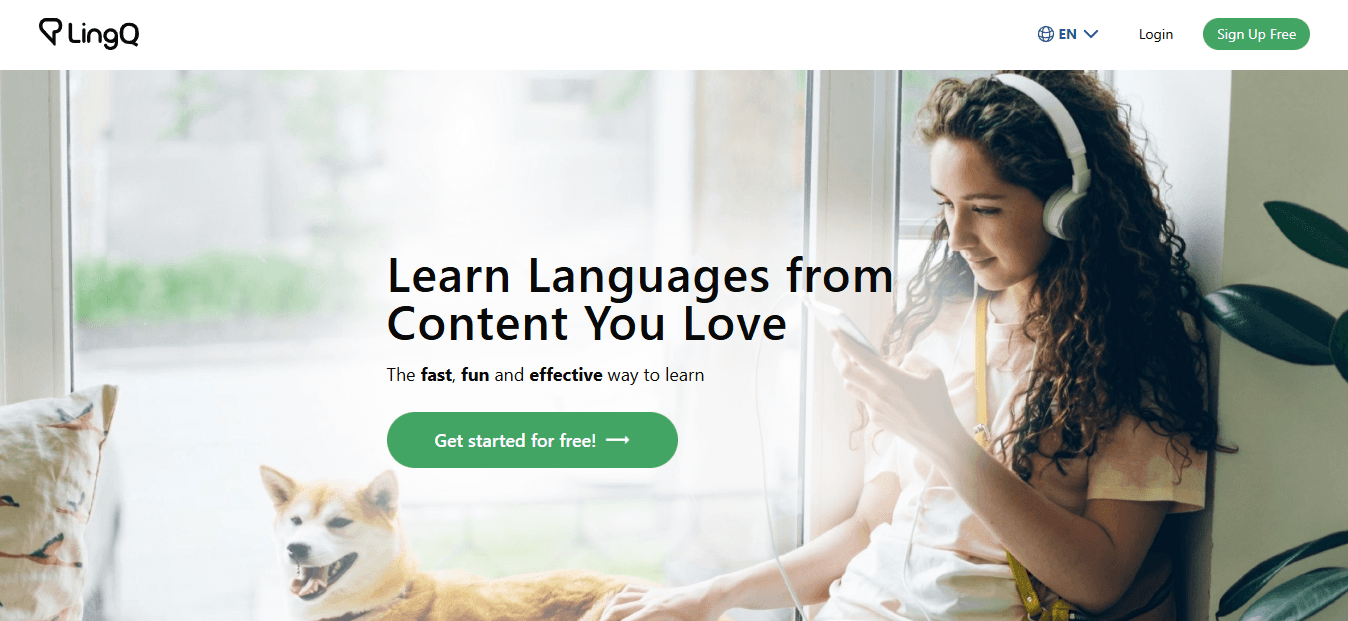
LingQ, real content, and personalized exposure. LingQ lets you import news articles, transcripts, and podcasts, turning real Polish media into study material while tracking new words. It is ideal for intermediate-plus learners who want to build passive comprehension and phrase mining from authentic sources.
Limitations:
It lacks structured speaking drills, so schedule speaking sessions to convert comprehension into production.
8. Drops
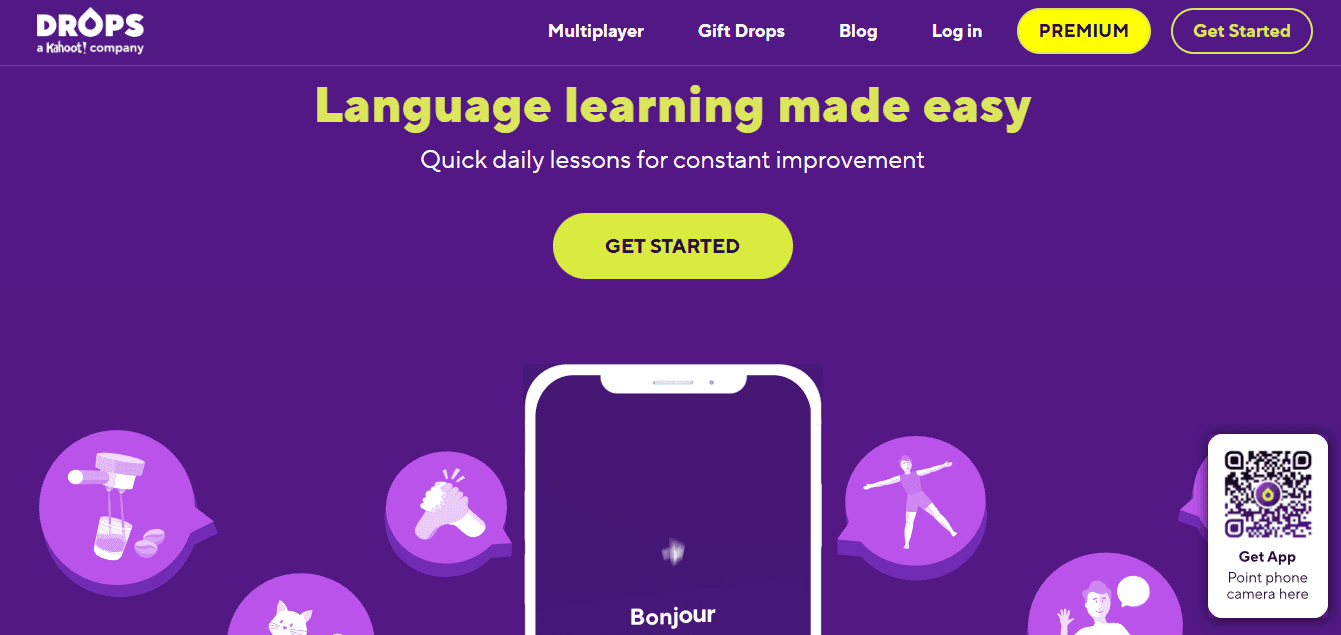
Drops, visual, focused vocabulary bursts. Lessons are quick, image-driven, and designed for high-frequency retention in short daily windows. Drops is perfect for commuters or visual learners who want rapid category-based vocabulary gains. It should not be your only tool, as it rarely addresses grammar or speaking fluency.
9. PolishPod101
PolishPod101, audio-first lessons plus culture. This platform offers structured audio and video lessons hosted by native speakers, with detailed grammar notes and downloadable transcripts.
It’s powerful for improving listening and gaining cultural context. For speaking growth, you will still need active practice; PolishPod101 primes comprehension so conversations feel smoother when you do them.
10. Italki
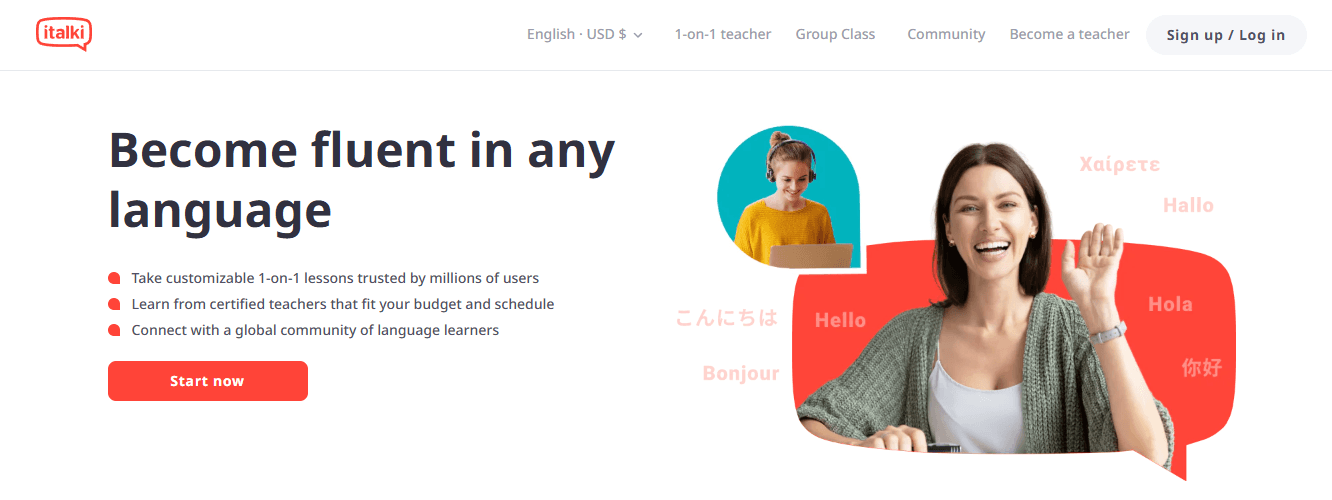
Italki, one-on-one human tutoring for real conversation. Italki connects you with professional teachers and community tutors, where many learners finally reach usable fluency. Pricing varies by tutor, letting you scale intensity to budget. Best for intermediate learners who already have basic structures and need live correction and tailored guidance.
Limitations:
Scheduling, cost variability, and inconsistent lesson design mean you should enter lessons with a clear agenda.
How to Combine These Tools Practically, Not Theoretically
If your immediate goal is to speak, start with a speaking-first routine and plug in targeted apps for gaps. Use Pingo AI or Italki for production practice, Memrise or Drops for daily vocabulary, Babbel or Busuu for contextual grammar, and LingQ or PolishPod101 for comprehension and phrase mining.
This mix converts passive learning into spontaneous speech without wasting hours on isolated drills that never get tested aloud. That combination is what shifts learners from hesitant to conversational in weeks, not months.
A Practical Scheduling Pattern That Actually Works
Try a weekly template:
Three short Pingo AI or Italki sessions totaling 60 minutes of spoken practice.
Four 10 to 15-minute Memrise or Drops sessions for vocabulary retention.
Two 20-minute Babbel or Busuu lessons for grammar reinforcement.
Add one passive LingQ or PolishPod101 listening hour for natural phrasing. This balance forces production, maintains retention, and prevents the motivational collapse that comes from doing only drills.
A Failure Mode to Watch for and How to Avoid It
When study becomes passive and measurable only in terms of streaks, you feel productive but remain unable to speak. That failure appears consistently across classroom and app-first workflows.
Stop chasing completion metrics; instead, measure one simple outcome each week, such as holding a 3-minute spoken exchange without translating in your head. If that fails repeatedly, increase live or simulated conversation time and reduce passive review.
A Quick Analogy to Remember Why This Matters
Learning Polish without speaking is like training a sprinter on the treadmill only, then expecting the athlete to win a 400 meter race outdoors; conditioning helps, but specificity of practice is what wins the race.
That simple shift changes everything about how you choose and combine apps.
But the real friction people hide runs deeper than which app they pick.
Related Reading
Choosing the Best App to Learn Polish

Choose the best app by matching measurable evidence to the way you actually learn and speak, not to feature lists or flashy marketing. Look for tools that force you to produce Polish aloud in short, repeatable doses, give immediate, specific corrective feedback, and let you track real speaking outcomes week to week.
Which Features Actually Signal a Speaking-First Design?
The clearest sign is a deliberate production loop. You speak, the app responds like a native, you get targeted correction, and you try again. Prioritize native-speaker audio variety, turn-by-turn corrective feedback that flags specific sounds or case choices, and adaptive prompts that push you from scripted lines into small improvisations. If an app only scores your answer as right or wrong, it will keep you stuck in safe rehearsals rather than spontaneous speech.
How Should Lesson Length And Pacing Influence Your Choice?
Pick an app built for distributed practice, not marathon study. Research from Georgetown University's Center for Applied Linguistics shows that short sessions of 15 to 20 minutes produce better retention than concentrated two to three-hour blocks, so a platform that scaffolds many brief speaking drills across the day will outperform one that dumps long lectures into a single sitting.
Practically, that means apps with micro-conversations, repeatable scenario sets, and quick review queues win for long-term fluency.
What Real Signals Show is the feedback of High Quality?
Look past marketing terms like smart review and check for evidence, such as transparent scoring, example corrections, and actionable alternatives.
Does the app show you the exact phonemes or word endings you missed?
Does it replay the native version at conversational speed and then at slowed speed?
Can you compare your waveform or receive phonetic hints?
Those features matter because Polish case endings and consonant clusters require precise, repeatable adjustments, not vague encouragement.
Why Community Size And Content Variety Matter More Than You Think
A large active learner base means more user-created material, more voices to model, and more chances to find a speaking partner or a tutor. With LearnPolska, which notes over 1 million people learning Polish worldwide, you get practical benefits:
Greater content diversity
More dialect samples
More peer feedback options
That network effect reduces the chance your practice becomes an echo chamber of the exact phrases.
What Hidden Technical and Pedagogical Checks Do I Run Before Committing?
Test the speech recognition with tricky, real phrases that include cases and aspect pairs. Use your phone speakers and headphones, rare consonant clusters, and a complete sentence, not just single words.
If recognition fails on simple, repeated sentences, that app will frustrate you when you try to improvise. Also, inspect whether the curriculum separates form from function, meaning, and use; the best tools let you drill a problematic grammar point inside actual dialogue, not as an isolated quiz.
The Familiar Approach, and Why It Breaks Down at Scale
Most learners stitch together a flashcard app, a grammar course, and an occasional lesson, because that feels measurable and safe. That works until you need to hold a three-minute conversation or respond to an unexpected question, and then the seams show: timing falls apart, case selection sputters, and confidence shrinks.
Platforms like Pingo AI provide always-on, scenario-rich speaking practice with instant, actionable feedback, so practice time becomes production time rather than passive review, preserving momentum as you scale intensity.
How to Evaluate Long-Term Value Beyond Trial Periods
Free trials hide friction. Instead of scoring completion, measure a simple behavioral change over two weeks:
Are you speaking without translating sentence by sentence?
Are your pauses shortening?
Does the app let you export performance logs or revisit previous spoken sessions to see improvement?
Those concrete metrics predict long-term return on your study time more reliably than a glossy dashboard.
A Quick, Practical Test You Can Run In Five Minutes
Open an app, choose a travel or family scenario, and try to speak freely for 60 seconds. Note whether the system:
Understands you
Provides specific correction
Nudges you to try a slightly harder turn
If any of the three is missing, the app will slow your transition from knowing words to speaking them under pressure.
Choosing well is like buying a tool that fits your hand, not a Swiss army of shiny gadgets. If you want to speak sooner, prioritize apps that force production, use short distributed sessions, and give corrections you can act on immediately.
That choice feels decisive now, but the real tipping point comes down to time and expectation — and that’s what we need to confront next.
Related Reading
How Long Does it Take to Learn Polish?

Polish takes time, and how long it takes depends on the level you want and the intensity you choose. Plan for a few months to reach comfortable, everyday conversation if you study deliberately, and for many more hours if you aim for complete professional fluency.
How Does Study Time Map to Calendar Time?
Use a planning benchmark, then convert it to your schedule. According to the Preply Blog, “Reaching conversational fluency in Polish takes around 1,000 hours,” which gives you a concrete target to plan around.
If you practice 15 minutes daily, that target spans several years; one focused hour a day compresses it into a couple of years; three hours daily puts you squarely in single-year territory. Those differences matter because consistency compounds: short, frequent speaking sessions beat irregular marathon study.
What Do Faster Timelines Actually Look Like?
There are aggressive, reproducible cases in which learners compress calendar time through intense, structured practice, and some learners report reaching conversational fluency in Polish in about 6 months with consistent study.
Those stories usually share two constraints:
A tight daily schedule and high exposure to real conversation, not just drills. If you can commit blocks of hours weekly, plus authentic speaking practice, you can reach usable fluency much faster than casual learners.
Where Most People Silently Lose Weeks of Progress
The familiar approach is to prioritize passive review because it feels measurable and safe. That works at first, but as you try to speak naturally, timing and automatic case selection break down, and progress stalls. The hidden cost is time wasted on material that never gets tested under pressure, which is why many learners plateau despite long study hours.
How Solutions Change the Math
Teams find that switching to speaking-first practice flips passive hours into productive feedback loops, so you improve pronunciation, word choice, and case selection in the contexts you will actually use. Platforms such as an AI language-learning app provide native-like responses, instant corrective prompts, and scenario repetition, compressing real-world speaking practice into short daily sessions and preserving momentum as you scale intensity.
What Measurable Milestones You Should Track
Set three concrete checkpoints:
Consistently produce a 2-minute unscripted exchange.
Respond without pausing to translate for 90 seconds.
Manage a short, task-focused conversation, such as booking travel or handling a complaint.
Each checkpoint signals a jump in practical ability and narrows the gap between hours logged and usable speaking skills.
Think of it like learning to drive a stick in traffic versus an empty lot, the latter builds control but only the former builds real readiness.
There is one study habit that separates hopeful learners from fast improvers, and the next section will show exactly how to build it.
9 Best Tips for Learning Polish
You should treat the nine tips as a toolbox. Each tip needs a concrete, repeatable tactic you can practice and measure. Below is a list of tips, each with actionable steps, troubleshooting cues, and short drills that turn intention into spoken skill.
1. Use Cheap Polish Resources
Pick inexpensive items that force speech, not passive reading. Rent a single chapter textbook and turn every exercise into a spoken drill. Read a short dialogue aloud three times, then record yourself summarizing it in one line. Trade one or two paid lessons for a week of structured speaking practice with a study partner, and use community tutors selectively for targeted correction.
When choosing a tutor, use a baseline like a teacher with 7 years of experience from a vetted marketplace, then book a single trial lesson focused purely on pronunciation or a single case you struggle with, not general conversation. This keeps costs low while directing every dollar at the highest-leverage friction point.
2. Master the Pronunciation of the Polish Alphabet
Turn pronunciation into a micro-habit. Spend five minutes each session on one sound group: stop consonants today, soft consonants tomorrow, and vowels the next day. Use a simple drill sequence: listen to the native model twice, repeat line by line, then record complete sentences and compare waveforms or rhythm.
For digraphs and trigraphs, create minimal pair lists (two near-identical words that differ only by that cluster) and alternate them until the rhythm feels automatic. If a sound still trips you, slow the sentence to 60% speed and articulate each phoneme, then bring the speed back up in steps.
3. Speak Polish From Your First Lesson
Begin with one sentence you can expand. Create a three-line script: a greeting, a purpose line, and a closing. Practice that script aloud until you can say it without thinking. On day two, replace one line with a short improvisation prompt, such as changing the place or time.
That small leap from scripted to improvised speech is the exact training that converts rehearsal into spontaneous use. Track hesitation time in seconds; when your pause for the same prompt falls below three seconds, you have real progress.
4. Learn the Most Common Polish Phrases
Don’t memorize lists, practice substitutions. Pick 20 high-frequency phrases and create ten substitution slots for each (names, places, verbs, times).
Drill by rotating through those slots in rapid succession, forcing your brain to map phrase frames to different real-world details. This is the fastest path from recognition to productive fluency because you learn patterns rather than isolated vocabulary.
5. Break Polish Grammar Down
Treat grammar like a modular gear you can assemble in conversation. For each troublesome feature, build a two-step drill:
A comprehension check, where you listen for the target form in native speech for five minutes.
A production check, where you force that form into three short, meaningful sentences.
For example, if a case is shaky, listen for it in a short news clip, then create three real-life sentences that require that case. Repeat weekly until swapping forms under pressure becomes automatic.
6. Use Spaced Repetition for the Best Way to Learn Polish
Tailor SRS to production, not just recall. Instead of SRS cards that only test recognition, design cards that require a spoken output: cue a prompt, talk about the response, and immediately compare to a native audio model.
Use interval tweaks:
If you can produce the phrase with less than a 3-second hesitation twice in a row, double the interval.
If you hesitate more than 5 seconds, halve it.
This converts SRS from a memory gym to a speech rehearsal system.
7. Create a Polish Immersion Experience
Make the immersion task-based so passive exposure becomes active practice. Assign missions: order a meal from a Polish recipe, summarize a film’s first five minutes aloud, or write and speak a 60-second radio-style report on a news article.
Rotate media sources and add constraints, such as using only learned phrases or avoiding translations. These constraints create productive discomfort that forces growth.
8. Practice Polish Every Day
Design a daily stack you can finish even on busy days:
warm-up (2 minutes of shadowing)
central drill (10 minutes of targeted speaking)
review (3 minutes of SRS output)
Anchor the stack to an existing habit, like brushing teeth or making coffee, so skipping becomes friction. If motivation slips, change only one variable for a week, such as topic or location, and you’ll often regain momentum without rebuilding the whole routine.
9. Be Prepared to Make Mistakes
Turn mistakes into data. After any spoken session, note one recurring error and assign a corrective micro-drill: three repetitions of the correct form in a new sentence, plus one immediate re-run of the original failed line.
Pair that with a short reflection:
What triggered the mistake, nervousness, or a gap in form?
When we ran a focused three-week pilot with constrained practice windows, learners who logged the single recurring error and drilled it daily reported faster recovery from the same mistake and greater willingness to speak aloud.
From Fragmented Study to Confident Speaking Practice
Most learners stitch together apps, flashcards, and occasional lessons because it feels practical and familiar. That approach, however, hides a cost, as it leaves production practice fragmented and episodic, turning hours into unrehearsed knowledge that does not hold up under pressure.
Solutions like Pingo AI provide always-on, scenario-rich speaking practice with immediate, actionable feedback and hundreds of realistic prompts. Hence, learners convert passive time into high-quality production practice, shortening the path from hesitance to confident speaking.
Practical Troubleshooting and Measurement Tips You Can Use Now
If your progress stalls, isolate the failure mode: is it confidence, recognition, or retrieval under time pressure?
Pick one metric and measure it weekly, for example, the length of uninterrupted speech you can produce on a single topic.
If pauses stay long but vocabulary is fine, shift more time to improvisation drills.
If pronunciation stalls, swap in slow-speed shadowing and waveform comparison.
Minor, targeted adjustments every week beat unfocused, longer sessions.
A Short Analogy to Keep it Practical
Think of learning Polish like fixing a leaky roof: patching visible holes helps, but unless you test the roof in a rainstorm, the hidden leaks remain. Speaking-first practice is like a rainstorm: it reveals where the patchwork fails, so you can repair the exact weak spot.
That simple, targeted approach changes how you spend every study minute, but the next part exposes a surprising way to start practicing for free.
Start Learning A Language with Pingo for Free Today
We know you want to speak Polish, not pile up words on flashcards, and that push deserves practice that aligns with how you actually use the language. Consider Pingo AI when choosing the best app to learn Polish, a conversation-first AI language app with adaptive feedback and beginner and advanced modes for guided speaking practice; try it free and notice how everyday conversations get easier.
Related Reading
Best French Language Books