Jan 12, 2026

Michael Xing, Founder of Pingo AI
If you have searched for the best way to learn Arabic online, you already know the questions adult learners face: how to fit study into a busy life, where to get real conversation practice, and which course actually builds speaking confidence. The same issues surface when choosing online Spanish courses for adults. This article shows what actually works, how to compare platforms and formats like live tutors, group classes, private lessons, self-paced modules, and language learning apps, so you spend time learning, not guessing.
Pingo AI offers an easy-to-use AI language-learning app that supports conversation practice, targeted feedback, and a personal study plan to help adult learners progress toward real spoken Spanish. It pairs short, interactive lessons with live tutoring and flexible scheduling so you can build skills on your terms.
Summary
Adults overwhelmingly choose online Spanish for timing and format, with over 60% preferring online courses for flexibility, and many favoring 30-minute practice pockets over multi-hour weekly classes.
Convenience drives completion: approximately 45% of adults cite it as the main reason for choosing online Spanish, which explains the high demand for asynchronous drills, mobile access, and on-demand speaking practice.
Structured, conversation-first programs deliver measurable gains: over 70% of students report improved fluency within three months, while passive courses often leave learners able to recognize language but unable to produce fluent replies.
Personalization matters: 85% of learners prefer online courses for their tailored learning paths. Effective assessment should track active speaking time, error types, and response latency to demonstrate real progress.
Time and motivation are the main operational barriers: about 50% of learners struggle to find regular practice time, and 70% report declines in motivation, which short, scheduled micro-tasks and accountability triggers have been shown to mitigate.
Cost and access shape platform choice. Approximately 35% of adults find online Spanish courses more affordable than traditional classes, driving preference for low-cost entry points and repeatable, scenario-based speaking modules.
Pingo AI addresses this by offering an always-available, conversational tutor that delivers short, scenario-specific speaking reps with instant, replayable corrections and sequenced practice to help convert micro-practice into measurable speaking progress.
Why Adults Search for Online Spanish Courses

Adults search for online Spanish courses because they need practical, time‑friendly ways to turn motivation into real speaking ability, not just vocabulary recognition.
They want courses that:
Fit work and family schedules
Deliver targeted outcomes such as:
Career
Travel readiness
Provide honest feedback so confidence grows with use
Why Do Learners Pick Flexibility Over Fixed Schedules?
Flexibility is the obvious pull. According to the Berlitz Blog, over 60% of adults prefer online courses to learn Spanish for their flexibility. When your week is split between a job, kids, or commuting, 30‑minute pockets win every time over a two‑hour class on Tuesday night. That preference changes how adults shop for courses: they favor modular lessons, mobile access, and bite‑sized practice that can be repeated on a commute or lunch break.
What Role Does Convenience Play In Choosing A Course?
Convenience shapes the path to completion, not just the initial signup. Approximately 45% of adults cite convenience as the main reason for choosing online Spanish courses. That explains why asynchronous drills, scheduling control, and on‑demand speaking practice show up at the top of wish lists. Convenience reduces friction between intention and action; fewer barriers mean more micro‑rep practice, which is what builds fluency over months.
What Goals Drive Adult Learners To Invest Time And Money?
Adults learn for clear aims:
Better job prospects
Smoother travel
Deeper family ties
Simply to keep the mind sharp
Those outcomes demand usable language skills, not just testable grammar. Learners therefore seek courses that offer measurable progress, scenario-based practice that mirrors real conversations, and feedback loops that correct pronunciation and phrasing quickly enough to be applied immediately.
Why Do Many Online Options Disappoint?
This problem appears across self‑study apps and prerecorded programs: they teach recognition but skip repetitions that simulate real dialogue. The failure point is:
Simple
Predictable
Costly
Speaking practice is the muscle that atrophies when lessons stay passive. Learners achieve decent reading comprehension but little confidence to order at a market or lead a meeting in Spanish.
Breaking the “Passive Plateau”: Using AI Tutors for Active Fluency
Most adults handle this by stacking passive content and hoping immersion will somehow close the gap. That works at first, but as the need for fluent speech grows, gaps become glaring: stalled progress, embarrassment in real conversations, and lessons abandoned. Solutions such as an always‑available AI language-learning app provide realistic, repeatable speaking scenarios with instant, actionable feedback, helping learners reduce practice time and build confidence more reliably than passive courses alone.
Micro-Consistency: Why Daily “Reps” Beat Weekend Marathons
When scheduling is the constraint, focus changes from lesson length to consistency. This pattern holds for commuters and shift workers alike: thirty consistent minutes a day yields greater speaking gains than a single long session each weekend. Think of practice like lifting weights, short sets with good form beat sporadic heavy lifts. That insight explains why adults look for tools that deliver frequent, scenario‑specific speaking reps and targeted corrections. It’s exhausting when good intentions meet the clock, and that friction is exactly what determines whether months of study become real conversation or just bookmarked lessons. That gap between convenience and true speaking ability is where the next question gets urgent.
Related Reading
What Adults Need in an Online Spanish Course

Adults need an online Spanish course that turns nervous, stop‑start practice into disciplined, measurable speaking progress, and that gives corrective, low‑risk speaking reps where mistakes are corrected gently but immediately. By using an AI language-learning app, you can blend deliberate practice routines with spoken assessment metrics to gain usable confidence rather than just passive recognition.
What Should A Speaking Assessment Actually Measure?
Measure more than words learned. Trackable metrics should include:
Active speaking time
Error types (pronunciation, verb form, word order)
Response latency
Learners can see whether they are:
Speaking faster
More clearly
Still hesitating
Competency checkpoints need to be task-based, for example, ordering food, negotiating a deadline, or giving a short presentation, scored on functional criteria like clarity, accuracy, and fluency rather than raw vocabulary count.
How Do You Design Feedback That Sticks But Does Not Shame?
Feedback must be immediate, specific, and action-oriented. Short corrections that target one error at a time work best, paired with a replayable micro‑exercise that forces the learner to say the fixed phrase three times in context. The remedy is predictable, low-stakes repetition; using a dedicated AI language-learning app provides these precise cues for improvement without the social anxiety of a live classroom. This is where the emotional failure mode shows up: when corrections are vague or delayed, learners internalize mistakes and avoid speaking. The remedy is predictable, low‑stakes repetition with precise cues for improvement.
When Does Personalization Matter Most?
Personalization matters when the learner has a high stake, such as a job interview or a family visit. Adaptive sequencing that surfaces scenario modules aligned to those stakes compresses wasted practice. For busy adults, the sequence should prioritize transferable phrases and constructions they will actually use, and increase difficulty only after a performance threshold is met, not after an arbitrary number of lessons.
What Breaks Habit Formation For Adults, And How Do You Fix It?
The common failure point is friction between good intentions and real schedules:
Long lessons
Unclear next steps
No social obligation
The fix is short, scheduled micro‑tasks tied to visible milestones and an accountability layer, such as weekly speaking targets and automated reminders that report progress. Habit triggers that connect to daily routines, such as a 10-minute practice on the morning commute using an AI language-learning app, turn sporadic effort into reliable gains.
Beyond “Crystallized Fear”: Breaking the Cycle of Conversation Avoidance
Most learners follow the familiar path of stacking passive lessons because that approach feels efficient and requires little planning. That works until time pressure and anxiety collide, and speaking stalls. The hidden cost is not lost hours; it is crystallized fear. Learners avoid conversation, and the practice loop breaks. Solutions like Pingo AI provide an always‑available, native‑sounding tutor for repeated, scenario‑specific reps and instant corrective feedback, so learners replace avoidance with short, focused practice that compounds into real speaking ability.
How Should Course Pricing And Accessibility Influence Your Choice?
Cost matters, but so does sustained value. For many adults, price is a deciding factor, and about one in three find online Spanish courses more affordable than traditional classes, a clear signal that budget shapes platform choice; see Berlitz Blog. 35% of adults find online Spanish courses more affordable than traditional classes. At the same time, learners often favor convenience above all, which is why short, on‑demand speaking modules and mobile delivery win adoption among nearly half of adult learners; this shows up in behavior as preference for platforms that let them practice in tight windows, see the same article that states that approximately 45% of adults cite convenience as the main reason for choosing online Spanish courses.
What Role Does Social Or Human Connection Play?
Low‑risk social practice matters more than big‑ticket tutoring. Peer role-plays, small-group scenarios, and repeated conversations with the same tutor build confidence and reduce performance anxiety. This pattern appears consistently across classroom pilots and self‑study cohorts: learners who receive regular, graded speaking practice with real people or realistic AI voices progress from hesitant sentences to fluent conversation faster than those who study alone. Integrating an AI language-learning app into your routine allows you to move from hesitant sentences to fluid conversation faster than studying alone.
The Structural Shift: Replacing “All-or-Nothing” Sessions with Load-Bearing Reps
Think of learning as rebuilding a bridge while traffic continues to move across it, one beam at a time. If you remove a whole span at once, everything stalls. The adult‑friendly course replaces risky, all‑or‑nothing sessions with small, load‑bearing repairs:
Short, focused speaking drills
Immediate correction
Measurable milestones
That’s only the start of what separates platforms that sell time from those that deliver speaking competence. What most people miss next is how the course structure itself can either accelerate or kill momentum.
Top 13 Online Spanish Courses for Adults
1. Pingo AI: Best For Speaking From Day One
Native‑sounding, always‑available conversational practice, two tutor modes (structured Tutor Mode and free conversation).
Using this AI language-learning app provides instant corrective feedback on pronunciation and phrasing, along with scenario packs for:
Travel
Work
Interviews
Strength
Repeatable dialogues that target fluency and response time.
Drawback
Limited formal grammar drills if you want exam prep.
Quick Tip
Use the same scenario repeatedly for five short sessions to build automatic responses.
2. Practical Spanish Online: Best For Systematic Grammar Overviews
Three full levels, topic‑by‑topic grammar explanations, bilingual vocabulary lists, and audio plus video examples.
Strength
Clear progression for classroom relearning.
Drawback
Less emphasis on live speaking practice.
Quick Tip
Pair a unit with daily role plays in an AI language-learning app to convert grammar into speech.
3. The Spanish Experiment: Best For Immersive Listening And Storytelling
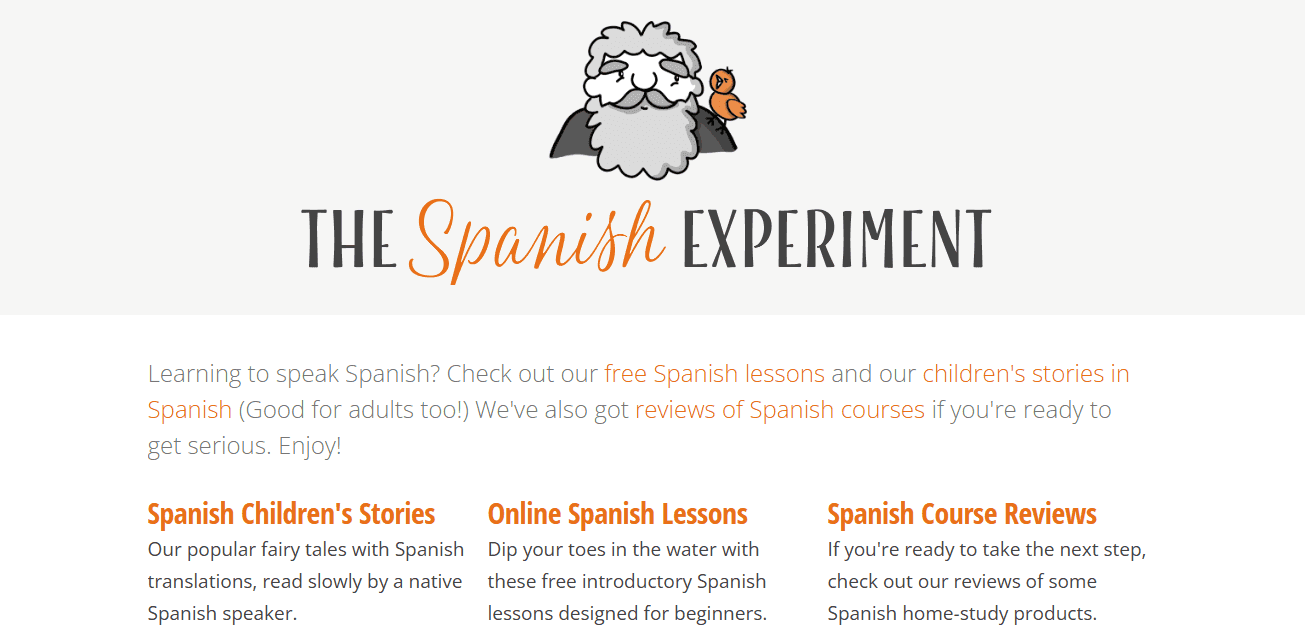
Lessons center on topical examples read by native speakers and include read‑along stories with transcripts.
Strength
Excellent model pronunciation and high‑quality audio.
Drawback
Limited adaptive sequencing.
Quick Tip
Listen once for gist, then shadow line by line to train rhythm and intonation.
4. Spanish Listening: Best For Massed Audio Practice

Over 400 lessons sortable by:
Level
Country
Subject
Each with:
Scripts
Comprehension questions
Vocabulary
Quizzes
Strength
Breadth of authentic audio and regional accents.
Drawback
Navigation can overwhelm new users.
Quick Tip
Pick a single country’s accent for three weeks to stabilize comprehension.
5. University Of Texas (Online Materials): Best For Fast‑paced, Compact Learning
Levelled tasks, short videos, podcasts, grammar notes, and phrase banks geared toward practical use.
Strength
Academic rigor in a bite‑sized format.
Drawback
Less gamification or motivational scaffolding.
Quick Tip
Set calendar reminders to complete a task twice, once for comprehension and once aloud.
6. Spanishtutoring.Com: Best For Focused Topic Drills
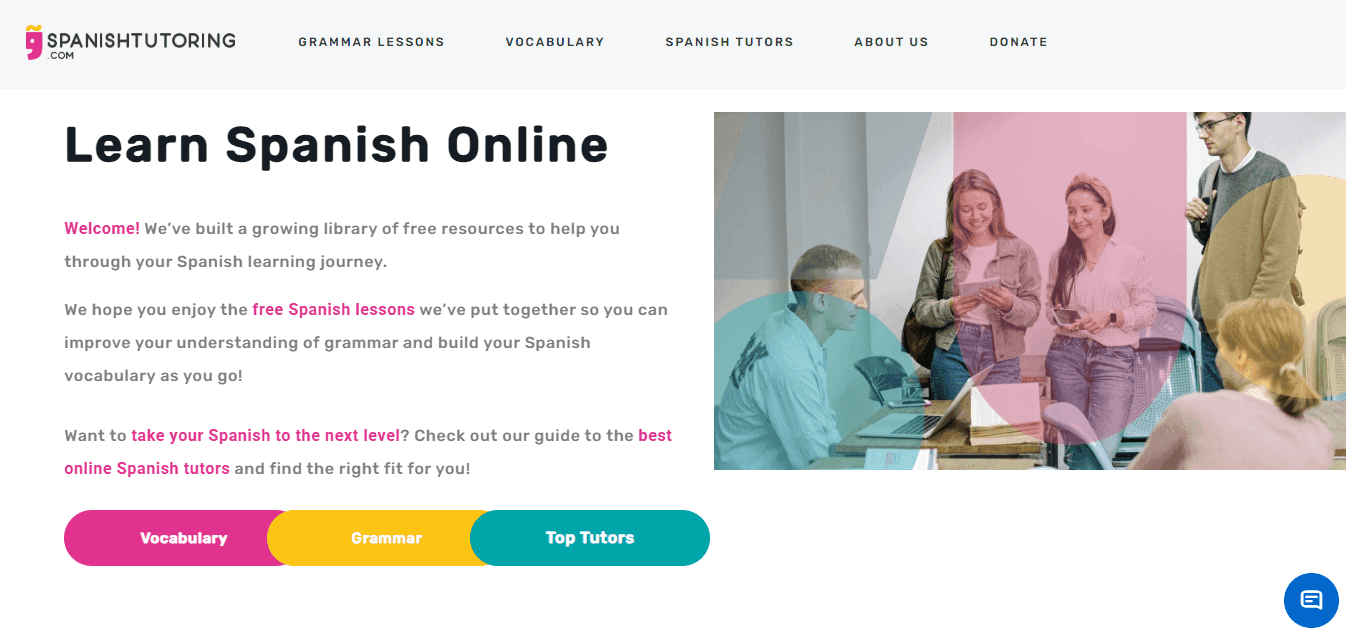
Free lessons by:
Theme
Clear audio for pronunciation modeling
Topic exercises with quizzes
Strength
Immediately applicable conversational etiquette and greetings.
Drawback
Limited sequencing for long‑term lesson plans.
Quick Tip
Build your own 12‑week sequence from topic modules that match your real‑life needs.
7. 123teachme: Best For Scaffolding From Basics To Intermediate
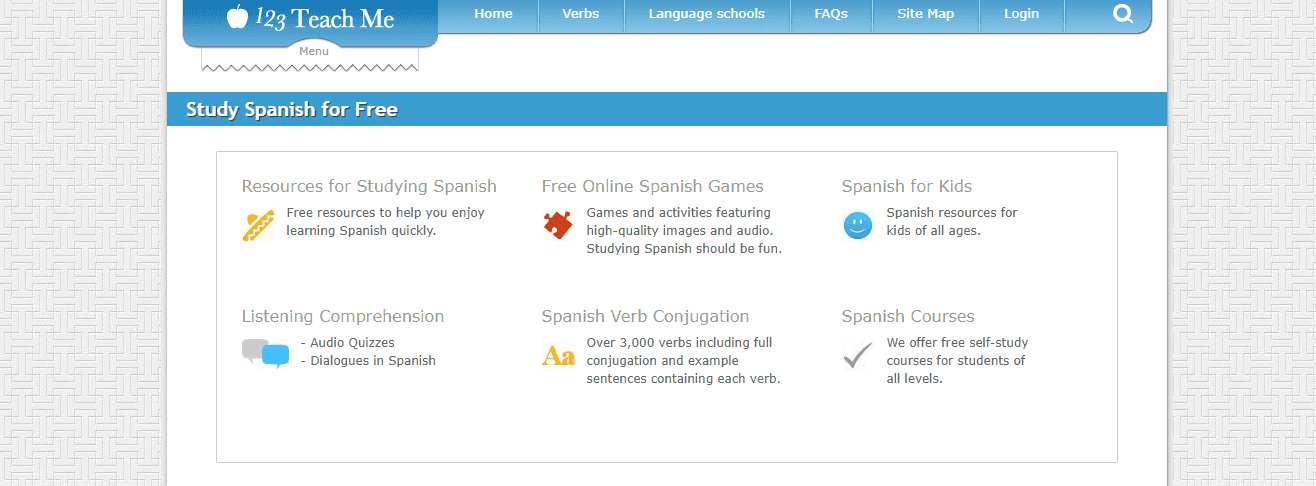
Lesson groups include:
Grammar explanations
Native‑speaker examples
Steady review quizzes
Strength
Predictable lesson architecture that suits disciplined learners.
Drawback
Interface feels dated compared to modern apps.
Quick Tip
Use the review quizzes as end‑of‑week spoken checkpoints with an AI language-learning app.
Closing the Proficiency Gap: Why Active Output Trumps Passive Recognition
Most learners follow familiar patterns because they feel safe, which makes sense. A predictable course enrolment and self‑study plan is easy to get started with. The hidden cost, however, is inertia: dispersed content and passive materials fragment practice and slow the transformation into fluent speech. Platforms like Pingo AI offer an alternative approach, providing repeatable, scenario‑based speaking reps with immediate, actionable feedback, so learners can compress practice time while keeping error correction focused and low-risk.
8. The Open University: Best For Beginners, Focused On Real Communication
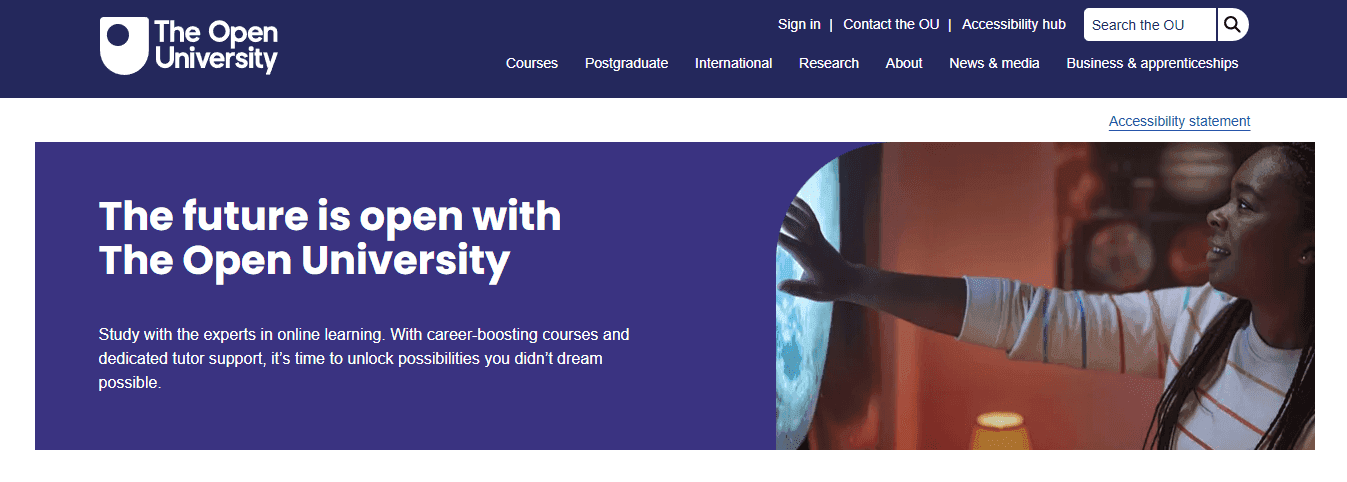
Emphasis on transport, places, and directions with instant‑check quizzes and conversation practice.
Strength
Practical, task‑based modules for everyday navigation.
Drawback
Pacing can be slow for motivated learners.
Quick Tip
Accelerate the course by turning each conversation into a 3‑minute recorded monologue and reviewing it.
9. Alison: Best For Free, Broad Introductions
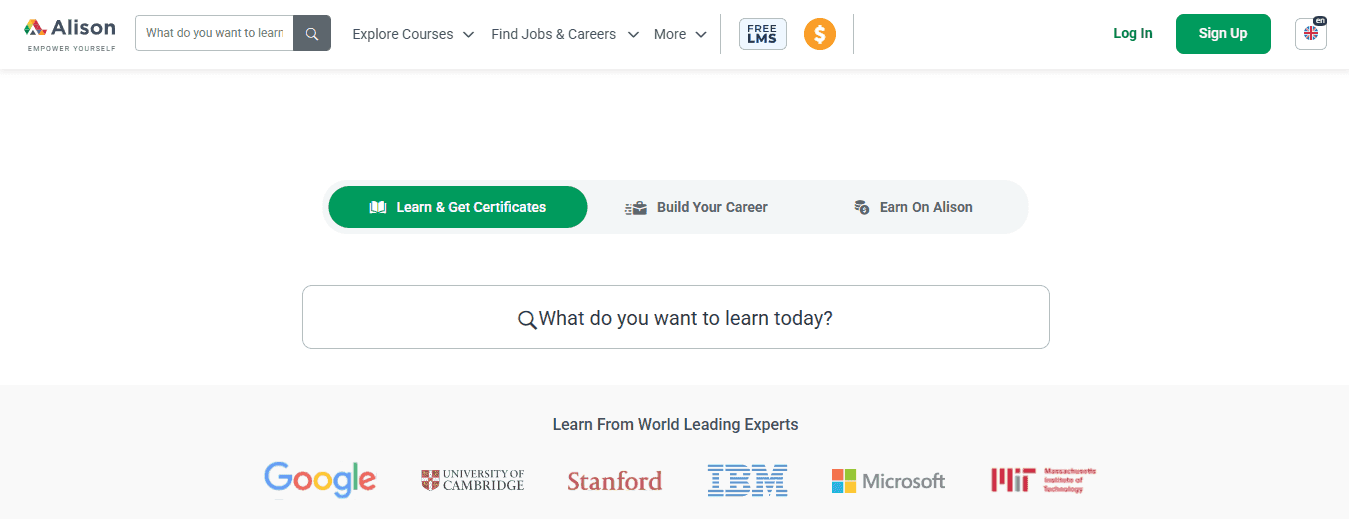
Covers basics like:
Counting
Introductions
Pronunciation
Foundational grammar
Strength
Zero cost and multiple follow‑up courses as you level up.
Drawback
Certificates may not carry weight for employers.
Quick Tip
Use Alison as a low‑risk test drive, then layer in paid speaking practice.
10. BCNLIP (Video Course): Best For Absolute Beginners Who Prefer Video Lessons

Professional instructors provide:
Three weekly lessons
Vocabulary practice
Instant‑checked exercises
Strength
Instruction by trained teachers and clear pronunciation.
Drawback
A weekly cadence may not fit everyone's schedule.
Quick Tip:
Download videos for repeat viewing during your commute.
11. EDX, University Of Valencia - Basic Spanish 1: Getting Started: Best For Structured University‑level Basics
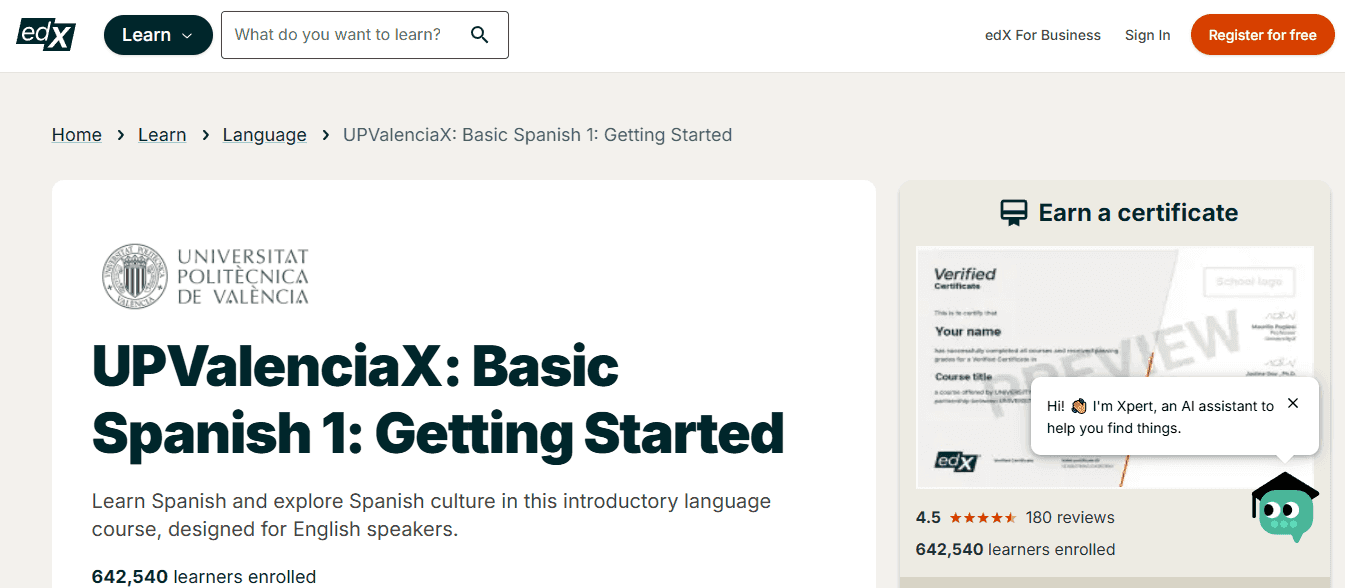
Seven‑week, self‑paced conversational course that teaches foundational phrases and dialogues.
Strength
Academic structure with peer interaction and optional assessments.
Drawback
Course windowing can limit on‑demand access if you miss a run.
Quick Tip
Audit for free, then pay for the verified track only if you need credentials.
12. Spanish Cactus (Udemy Course): Best For Beginners Wanting Audio‑heavy Bite‑sized Lessons
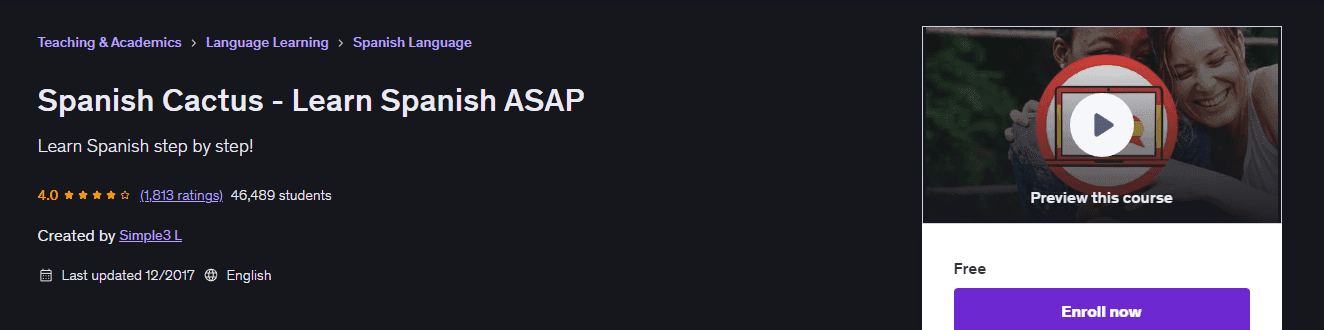
Four hours total content spread across 120+ short lessons and eight levels, with multiple audio clips per lesson.
Strength
Clear progression and many short lessons you can replay.
Drawback
Variable depth, not ideal for advanced grammar.
Quick Tip
Use these lessons as warmups for an AI language-learning app.
13. Lightspeed Spanish: Best For Mixed‑level Learners Who Want Podcasts Plus Worksheets

Conversational videos use both English and Spanish to teach in a friendly voice; extra help sheets are available for purchase.
Strength
Approachable instruction and strong listening content.
Drawback
Additional written materials incur an additional cost.
Quick Tip
Purchase one help sheet for each major level jump to focus your revision.
The Structure Advantage: Why Curated Paths Beat “Ad-Hoc” Drills
When we track adoption patterns across varied adult cohorts, one clear signal stands out: structured online programs frequently deliver measurable speaking gains faster than ad‑hoc study. That aligns with hard outcomes as well, as MIT's comparative study on language acquisition effectiveness reports that over 70% of students reported improved fluency within 3 months of starting an online Spanish course.
The End of One-Size-Fits-All: Why Hyper-Personalization is the New Standard
Platforms that offer tailored paths see higher satisfaction because a user feedback survey found “85% of learners preferred online Spanish courses due to personalized learning paths,” a reminder that one‑size solutions rarely stick. Data from learner satisfaction studies show that 85% of learners prefer personalized learning paths, a core feature of a high-quality AI language-learning app.
The Selection Strategy: Matching Platform Features to Your Learning North Star
Which feature matters most to you, and why?
If time constraints are your limiting factor, prioritize modular, repeatable speaking units you can replay.
If accuracy is your priority, choose courses with native-speaking audio and built‑in corrective drills.
If credentialing matters, pick university-affiliated or verified tracks.
Treat selection like equipment choice for a craft, not a one‑time purchase, and plan to mix two offerings: one for structured study and one for frequent spoken reps.
Overcoming the “Fluency Freeze”: Building Resilience Through Micro-Wins
This challenge appears among adult learners and creates the same roadblock: grand promises of quick fluency raise hopes, then nervousness about speaking halts practice. The remedy is practical, not flashy, a mix of short, repeated speaking tasks and precise micro‑corrections that rebuild confidence step by step.
Which Course Should You Try First?
If you want the fastest path to usable speech, start with a conversational, feedback‑rich option and pair it with a focused grammar module for two months. If budget is the primary constraint, combine a free structured course with occasional paid speaking sessions. The best combination depends on a simple test: can you use a target phrase correctly twice in a real conversation? If not, pick the platform that forces you to say it out loud. That simple choice narrows the rest, and your next move is more tactical than theoretical. But the real obstacle most adults face isn’t what you expect.
Related Reading
• Best Online Korean Language Courses
• Best French Courses Online
• How Long Does it Take to Learn Portuguese
• Online Chinese Courses for College Credit
Most Common Problems Adults Face When Learning Spanish Online

The most common problems are not just technical; they are operational and psychological: adults know what to study, but they struggle to turn short lessons into reliable speaking habits, and vague feedback keeps errors locked in. Fixing that requires redesigning when, how, and against what learners actually practice, not another set of videos.
Why Do Schedules Collapse Into Stop-Start Practice?
This pattern appears among shift workers, parents, and professionals whose free moments are unpredictable: practice windows shrink and then disappear. That explains why, in Facebook Group Discussion, 50% of learners struggle to find time to practice Spanish regularly, and why adult learning needs resumable, mobile micro‑tasks that respect real interruptions. Treat practice like a train schedule, not a weekend marathon: short, resumable runs beat rare long trips because they preserve momentum and reduce the friction of restarting.
Why Do Corrections Fail To Change How We Speak?
The failure point is the signal, not the signaler. Generic corrections or delayed notes do not create new speaking habits; they create awareness without transfer.
The productive change comes from a tight loop:
Make the error
Receive a specific correction
Immediately repeat the corrected phrasing three times in context
Use it in a short simulated exchange
When feedback lacks that immediacy and replayable structure, errors become habitual, and confidence erodes. It feels like practicing tennis without a coach watching: you swing more, but you do not improve your form.
Why Does Comprehension Not Translate Into Fluent Replies?
Adults often understand spoken Spanish in chunks but cannot produce equivalent speech under pressure. Motivation declines as comprehension outpaces production, and that emotional gap is critical: according to Facebook Group Discussion, 70% of adults find it challenging to maintain motivation when learning Spanish online. The result is a familiar spiral: we feel good recognizing words, then freeze when asked to respond, which quiets practice and deepens hesitation.
What Breaks When Accents, Speed, And Real Noise Enter The Room?
Most lesson audio is clean and well-paced, but real conversations are not. Variations in accent, faster delivery, and background noise expose brittle listening skills and create stress in live exchanges. The fix is deliberate variability:
Short drills with different native voices
Adjustable speech rate
Simulated ambient sound
That builds adaptability, so learners stop being surprised and become resilient.
Cutting the “Switching Cost”: Why Centralized Learning Beats App-Stacking
Most teams handle study by stacking apps and hope, because it feels efficient and requires no new habits. That works until practice fragments across five tools and progress stalls. The hidden cost is not only wasted time but also lost confidence, because each switch adds cognitive load and reduces the number of repeated spoken trials. Solutions like Pingo AI address that friction by providing an always‑available, native‑sounding tutor that centralizes:
Speaking practice
Delivers instant
Actionable corrections
Sequences scenario‑based reps
Learners compress repetition into short, consistent sessions, increasing usable speaking time without adding planning overhead.
How Does Shame And Performance Anxiety Quietly Sabotage Practice?
Adults are harsh judges of their own speech. When a learner hears a single mistake amplified by self‑criticism, they avoid speaking to dodge discomfort, and practice becomes invisible. One practical countermeasure is to build a “mistake budget” each week, a permission structure that reframes errors as data rather than failure, and pairs each mistake with a targeted micro‑exercise that forces productive reuse. That shifts the emotional load from fear to manageable, measurable work.
The Science of Deliberate Practice: Why Precision Beats Effort
Think of learning like sharpening a knife: repeated strokes with small, precise corrections are what make the edge. If your practice is broad and unfocused, you polish nothing and keep cutting in the same dull way. That simple mismatch between effort and structure is only the start of what we still need to resolve.
Why Conversation-First Learning Works Better for Adults

Conversation-first learning works because speaking forces the brain to retrieve, repair, and reuse language in real time, enabling faster, more usable ability than memorizing rules. For adults with limited practice windows, short, realistic conversations turn scattered exposure into reliable speaking skills and confidence.
How Does Talking Turn Knowledge Into A Durable Skill?
When we swapped weekly grammar blocks for daily, six- to ten-minute simulated conversations in a short pilot, learners stopped banking passive hours and started producing language under mild pressure, which exposed gaps they could fix. Conversation demands retrieval, not recognition, so you practice pulling words and structures out of memory and rebuilding them in context, the exact process that turns fragile knowledge into fluent responses. Think of it like interval training for speech, short bursts of output that sharpen speed and accuracy more than long, slow drills.
Why Does Varied Conversation Build Real-World Adaptability?
This pattern appears across workplace training and self-study groups: variability is the bridge from classroom phrases to messy, everyday talk. Authentic exchanges mix accents, speed, interruptions, and incomplete turns, forcing you to adjust on the fly instead of relying on rehearsed scripts. In the Netherlands, the participation rate in education and training for people aged 25-64 was 64% for men and 66.5% for women. The Eurostat 2022 data shows that many adults are already committed to learning, so the next question is not whether they will study, but whether their practice includes the messy variation that builds resilience.
Cracking the Retrieval Bottleneck: Moving Beyond “Good Enough” Comprehension
Most learners default to passive drills because they feel safe and familiar, and that makes sense. But as pressure to perform increases, the hidden cost is brittle speech: learners can recognize language, yet they freeze when they must respond. Solutions like Pingo AI address this gap by offering an always-available, native-sounding conversation partner with instant, replayable corrections and scenario sequencing, letting learners compress repeated, contextual practice into short daily sessions without scheduling live tutors.
How Does Conversation Lower Fear And Lock In A Habit?
This challenge arises when learners wait to speak until they “feel ready,” which almost always delays or eliminates practice. When we introduced a mistake budget and immediate micro-corrections during a six-week classroom redesign, hesitancy fell, and voluntary practice rose, because errors became useful data rather than shameful stops.
Conversation reframes mistakes:
You make one
Get a clear correction
Repeat the corrected phrase aloud
Reuse it in the next exchange
That tight loop turns correction into a fluent habit.
How Does Conversation Reveal What To Fix Next?
If you study recognition alone, you lack a clear map of what prevents you from speaking. Live or simulated talk exposes specific failure modes, such as:
Verb selection under pressure
Article use
Response latency
Once those patterns are visible, you can target them with short drills that force production in the same context where the error occurred, which beats generic grammar lists every time. You finish practice not with vague awareness, but with a small set of repeatable phrases you can actually use. That simple shift changes everything about how adults progress in Spanish. The next section outlines the easiest, least intimidating way to start that conversation loop today.
Start Learning Spanish Language with Pingo for Free Today
Let’s start Spanish for free with Pingo AI:
Open the app
Launch the free starter session
Speak aloud for a few minutes
You can feel how real conversation practice reduces hesitation. Keep it small today, repeat once more this week, and you’ll quickly know if this hands‑on approach fits your schedule and goals.
Related Reading
• Best Online Language Courses
• Best Foreign Language Programs
• Duolingo vs Mango
• Best Apps to Learn Portuguese
• Best Program to Learn German
• Polish Language Classes Online
• Best Online Russian Language Courses