Best AI Pronunciation Coach vs Human Tutor: 2025 Cost Analysis
Best AI Pronunciation Coach vs Human Tutor: 2025 Cost Analysis
AI pronunciation coaches cost $20-60 monthly for unlimited access, while human tutors charge $50-150 per hour. With 80% of learners reporting increased confidence in just 3 weeks using AI coaches like Pingo AI, the technology delivers faster results at a fraction of traditional tutoring costs—typically 5-15% of human rates.
At a Glance
• Cost difference: AI pronunciation coaching at $14.99-60/month vs human tutors at $200-600/month for just 4 hours weekly
• Speed to results: 80% confidence gains in 3 weeks with AI vs months with traditional tutoring
• Availability advantage: AI coaches support 194 students simultaneously with 24/7 access vs 20-30 students weekly for human tutors
• ROI calculation: Annual AI coaching costs $99-720 compared to $2,400-7,200 for weekly human tutoring sessions
• Learning effectiveness: Real-time AI feedback shows 18% pronunciation improvement over 4 weeks vs 7% with delayed teacher feedback
A 2025 learner deciding between an AI pronunciation coach and a private human tutor cares first about time and money. By comparing hourly rates, subscription models and learning-gain data, we show why an AI pronunciation coach can out-perform costlier human options.
Why Compare an AI Pronunciation Coach to a Human Tutor in 2025?
AI language practice refers to the use of artificial intelligence to facilitate language learning. Today's intelligent tutoring systems democratize personalized education by providing adaptive instruction and learning materials to millions of users worldwide. These systems have evolved significantly in effectiveness, matching traditional human tutors in certain contexts.
The AI pronunciation coaching market has exploded in 2025. With 80% of learners reporting increased confidence in speaking within just 3 weeks of using apps like Pingo AI, the technology has proven its value beyond early skepticism. AI language tutors now incorporate natural language processing technology, interactive exercises, personalized feedback, and speech recognition technology to deliver results that were previously only possible with human instructors.
What makes this comparison particularly relevant now? The traditional bottleneck of language learning - speaking practice with corrective feedback - has been solved at scale. Rather than scheduling weekly sessions with a tutor who charges premium rates, learners can now access pronunciation coaching 24/7 through AI systems that provide immediate, targeted corrections.
What Does Pronunciation Help Cost in 2025?
The pricing landscape for pronunciation assistance reveals a stark divide between AI and human solutions:
Service Type | Cost Range | Availability | Students Supported |
|---|---|---|---|
AI Pronunciation Apps | 24/7 access | 194 simultaneously | |
Human Tutors (Online) | Scheduled sessions | 20-30 weekly | |
Human Tutors (Premium) | Limited availability | 1-on-1 only | |
Speech Language Pathologists | Professional settings | Clinical caseload |
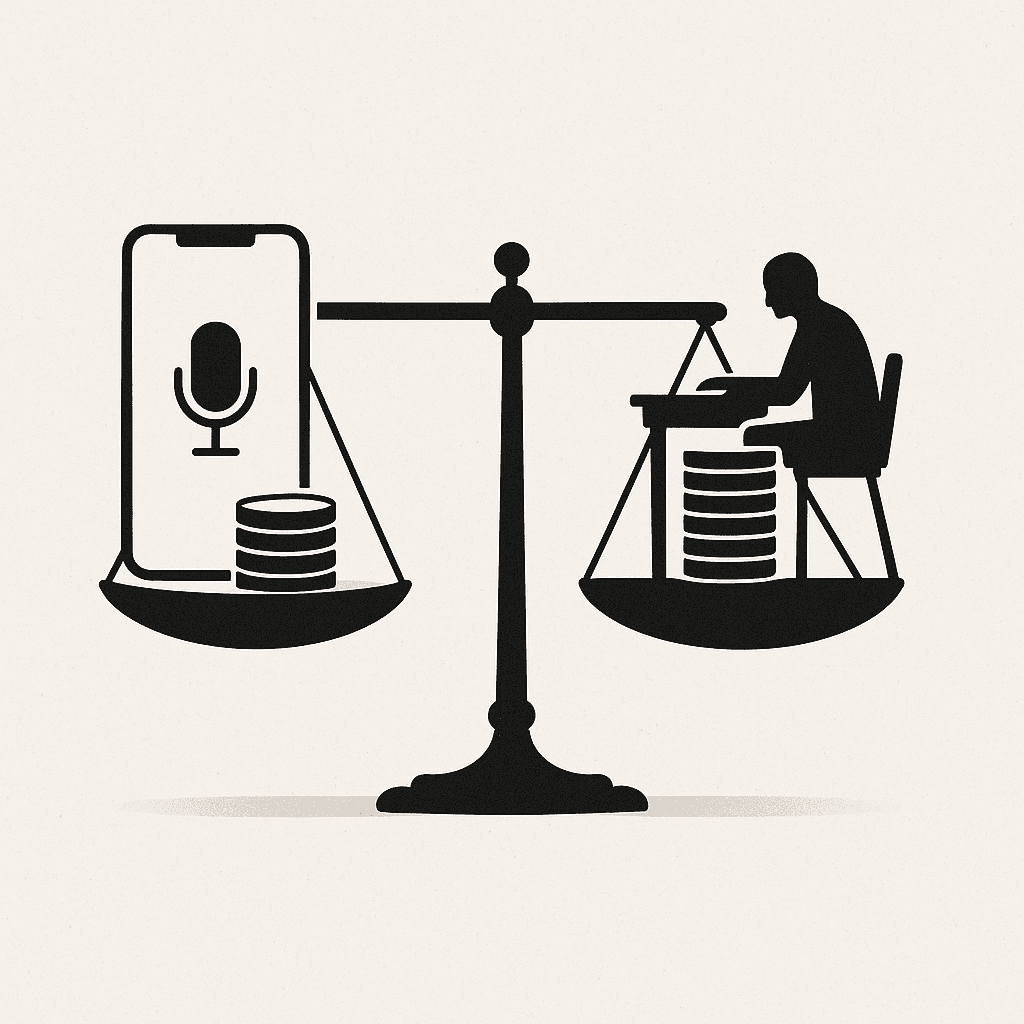
The math becomes clear when you calculate monthly expenses. A learner taking just four hours of human tutoring monthly at mid-range rates ($50/hour) spends $200, which is more than triple the cost of unlimited AI pronunciation coaching. For intensive learners practicing daily, the gap widens dramatically. Consider that human tutors typically manage 20-30 students weekly, creating scheduling bottlenecks, while AI platforms support hundreds of concurrent users without quality degradation.
Hidden costs further tip the scales. Human tutoring often requires commuting time, cancellation fees, and inflexible scheduling that can disrupt learning momentum. Meanwhile, AI pronunciation apps maintain steady pricing regardless of usage intensity, with most offering free trial periods to test effectiveness before committing.
Does Real-Time AI Feedback Beat Traditional Correction?
The speed of feedback fundamentally changes learning outcomes. Research from Thai university students using ASR-based pronunciation apps showed significantly greater gains on challenging sounds absent in their native language, particularly with fricatives like /θ/ and /ð/. The experimental group receiving AI-mediated training demonstrated substantially greater improvements than control groups using traditional methods.
When Chinese EFL learners used mobile apps with real-time pronunciation feedback, they improved vowel duration by 18% over four weeks, compared to only 7% for peers receiving delayed teacher feedback. The real-time feedback showed a mean effect size of g = 0.64, compared to g = 0.39 for delayed feedback, which represents a meaningful difference in educational terms.
The mechanism behind this advantage is clear. AI-driven pronunciation systems like SpeechAce provide detailed phoneme-level feedback that pinpoints precise errors in pronunciation. As one researcher noted, "students perceived SpeechAce as a user-friendly and effective tool" that excelled through its immediate feedback and interactive features. Students receiving this immediate feedback can self-correct in the moment, building muscle memory and neural pathways more effectively than waiting days for teacher comments.
Synchronous vs. Delayed Feedback: What Do the Numbers Say?
The timing of corrections dramatically impacts retention and improvement rates:
Synchronous grammar corrective feedback has proven more effective than asynchronous methods in online writing tasks
Learners receiving immediate visual feedback through waveforms and color cues report higher motivation than those getting teacher summaries
Guided self-correction offers superior learning experiences, particularly for learners with high motivation or lower linguistic ability
These findings challenge the assumption that human feedback is inherently superior. While human tutors provide valuable emotional support and cultural context, the immediacy and precision of AI feedback creates faster skill acquisition for pronunciation specifically.
How Much ROI Does Pingo AI Deliver Over a Private Pronunciation Tutor?
The return on investment calculation for Pingo AI versus traditional tutoring reveals compelling economics:
Metric | Pingo AI | Private Tutor | Cost Efficiency |
|---|---|---|---|
Monthly Cost | $200-600 (4-8 hours) | 93-97% savings | |
Annual Cost | $99.99 | $2,400-7,200 | Same quality at fraction of cost |
Confidence Gains | Variable, typically months | Faster results | |
User Base | 1.5 million+ active | Limited by tutor availability | Proven at scale |
Pingo AI's value proposition extends beyond raw cost savings. The platform learns from millions of interactions, continuously improving its feedback algorithms. Unlike human tutors who work with limited student populations, Pingo AI's machine learning models benefit from vast datasets of pronunciation patterns across languages and accents.
The scalability advantage cannot be overstated. While a human tutor charging $50 per hour might generate $5,000 monthly working full-time, they can only serve perhaps 20-30 students effectively. Pingo AI serves hundreds of thousands simultaneously at a fraction of the per-student cost, democratizing access to quality pronunciation coaching.
Time to Reach B1 Pronunciation Benchmarks
Speed to proficiency determines true value:
Duolingo learners start conversations after 4-6 weeks with 90% average accuracy
Pingo AI users report 80% confidence gains in just 3 weeks through active speaking practice
Traditional tutoring typically requires months of weekly sessions to achieve similar milestones, at exponentially higher costs.
What Other Benefits Does an AI Coach Unlock?
Beyond cost advantages, AI pronunciation coaches deliver unique benefits impossible with human tutoring:
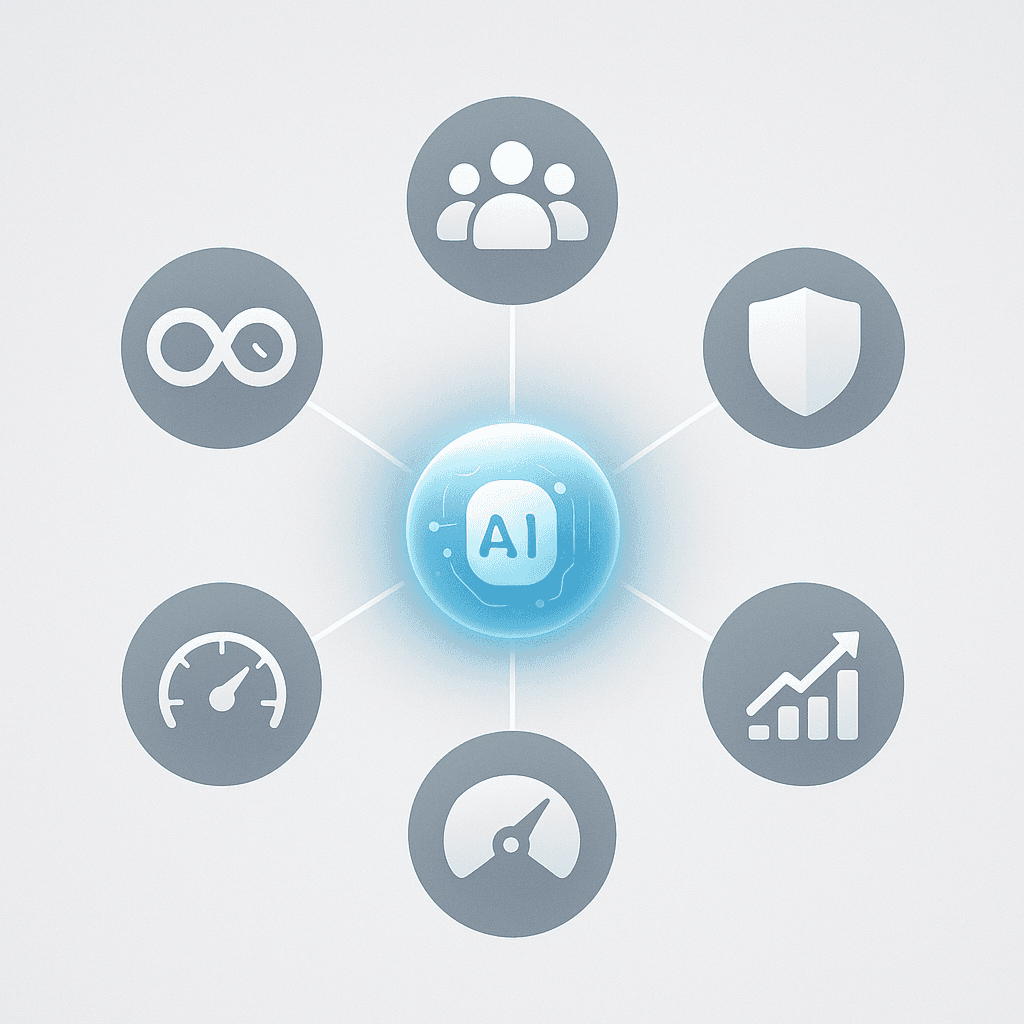
Unlimited scalability: AI systems support 194 students simultaneously versus 20-30 for human tutors
24/7 availability: Practice pronunciation at 3 AM or during lunch breaks without scheduling constraints
Consistent quality: No variation based on tutor mood, fatigue, or expertise gaps
Privacy for mistakes: Learners practice without fear of judgment, increasing willingness to attempt difficult sounds
Data-driven improvement: Track progress across thousands of practice sessions with detailed metrics
The annual cost of just $20 for AI tutoring support (based on actual usage data) makes quality language education accessible to underserved populations globally. This democratization effect cannot be achieved through traditional tutoring models constrained by human availability and geographic limitations.
AI coaches also eliminate common friction points. No cancellation fees, no commute time, no awkward small talk, just focused pronunciation practice whenever motivation strikes. For working professionals or parents with unpredictable schedules, this flexibility often determines whether consistent practice happens at all.
When a Human Touch Still Matters
Despite AI's advantages, certain scenarios still benefit from human involvement. 85% of language learners believe human interaction remains important in their learning journey, with 39% preferring a combination of human and AI tutoring.
Human tutors excel in:
Emotional intelligence: 92% accuracy in reading emotional states versus 68% for AI systems
Cultural nuance: Explaining idioms, regional variations, and social context beyond pronunciation
Complex problem-solving: Adapting to unique learning challenges or disabilities
Motivation and accountability: Building personal relationships that sustain long-term commitment
The 2023 ASEAN EdTech Survey found that while 68% of language institute students tried AI chatbots, only 27% continued using them after three months. This suggests that pure AI solutions may lack certain engagement factors that human interaction provides.
The optimal solution often combines both approaches. Use AI for daily pronunciation drills and immediate feedback, then supplement with occasional human tutoring for conversational practice and cultural insights. This hybrid model maximizes ROI while addressing the full spectrum of language learning needs.
Bottom Line: Picking the Right Coach for 2025
The data tells a clear story. For focused pronunciation improvement, AI coaches like Pingo AI deliver superior ROI through lower costs, faster results, and unlimited availability. With 80% of users reporting increased speaking confidence in just three weeks at a fraction of traditional tutoring costs, the value proposition is compelling.
Choose AI pronunciation coaching when:
Budget is a primary concern
You need flexible, frequent practice
Immediate feedback accelerates your learning
Privacy and low-pressure environments help you thrive
Consider human tutoring when:
Emotional support and accountability are crucial
You're preparing for specific cultural contexts
Complex language challenges require personalized strategies
Budget allows for premium one-on-one attention
For most learners in 2025, starting with an AI pronunciation coach like Pingo AI makes financial and practical sense. The platform's combination of advanced speech recognition, instant feedback, and proven results at just $14.99 monthly removes traditional barriers to pronunciation mastery. You can always add human tutoring later for specific needs, but why pay 10x more for basic pronunciation practice that AI handles brilliantly?
The revolution in language learning isn't coming; it's here. Smart learners are already leveraging AI to achieve pronunciation goals faster and more affordably than ever before. The question isn't whether AI pronunciation coaching works, but whether you can afford to ignore its advantages.
Frequently Asked Questions
What are the cost differences between AI pronunciation coaches and human tutors in 2025?
AI pronunciation apps typically cost between $20-$60 per month, offering 24/7 access, while human tutors charge $15-$150 per hour, often requiring scheduled sessions. This makes AI solutions significantly more cost-effective for regular practice.
How does Pingo AI improve pronunciation learning outcomes?
Pingo AI uses advanced speech recognition and real-time feedback to enhance pronunciation skills. Users report 80% confidence gains in speaking within just three weeks, thanks to its interactive exercises and personalized feedback.
What are the advantages of AI pronunciation coaches over human tutors?
AI coaches offer unlimited scalability, 24/7 availability, consistent quality, and privacy for mistakes. They provide immediate feedback, which accelerates learning and is more cost-effective compared to human tutors.
When should learners consider human tutors over AI coaches?
Human tutors are beneficial for emotional support, cultural nuances, complex problem-solving, and motivation. They are ideal for learners who need personalized strategies or are preparing for specific cultural contexts.
How does Pingo AI's ROI compare to traditional tutoring?
Pingo AI offers a 93-97% cost saving compared to traditional tutoring, with faster results and scalability. It supports millions of users simultaneously, providing quality pronunciation coaching at a fraction of the cost.
Sources
https://dialzara.com/blog/ai-tutoring-vs-traditional-tutoring-key-differences/
https://www.asha.org/siteassets/practice-portal/slp-health-care-survey-report.pdf
https://www.getpronounce.com/blog/real-time-vs-delayed-feedback
https://callej.org/index.php/journal/article/download/511/440/2181
https://www.educationalappstore.com/app/pingo-ai-language-learning
https://duolingo-papers.s3.amazonaws.com/reports/Duolingo_whitepaper_language_conversation_2024.pdf
https://www.lingoda.com/en/p/research/future-language-learning-human-ai/
https://www.frontiersin.org/journals/education/articles/10.3389/feduc.2025.1656204/pdf