Jan 16, 2026

Michael Xing, Founder of Pingo AI
Choosing the best program to learn German can feel like sorting through endless online courses, tutors, and apps, especially if you searched for the best way to learn Arabic online and saw so many competing claims. You want structured lessons, grammar practice, vocabulary building, and real speaking drills that move you from A1 to B1 and beyond. Which program gives steady progress, clear pronunciation training, and interactive practice? This article shows how to pick the best program to learn German, compares online German classes and apps, and points you to programs that match your goals.
To help with that, Pingo AI's solution, an AI language-learning app, offers tailored lessons, speaking feedback, and quick vocab drills that keep your practice focused and practical, and it fits into a busy schedule.
Summary
Choice overload is a major barrier for learners: 50% of people report it is challenging to choose a German program, and the over 200 online options available drive decision fatigue rather than purposeful selection.
Most programs optimize measurable recognition skills, supported by Germany's investment of 5.1% of GDP in education and by 85% of students achieving basic reading proficiency, which explains why courses prioritize reading and grammar testing over riskier speaking work.
Passive study produces quick visible wins but not conversational readiness, so the article recommends converting one short recognition exercise into a focused three-minute output drill to train retrieval under pressure.
Speaking anxiety is widespread and consequential, since 75% of people report anxiety when speaking in public, while 60% say they want to improve public speaking, indicating learners want fluency but need lower-friction practice paths.
One-to-one tutoring can significantly increase speaking time: learners who trial three tutors in their first month settle on one that increases weekly speaking time by about 40 percent, yet cost and scheduling remain significant barriers to frequent practice.
A practical routine closes the gap: use two short daily sessions, one reactive, unscripted round of 5 to 10 minutes, and one corrective repetition round, so mistakes are surfaced and motor patterns are retrained rather than left to fossilize.
This is where Pingo AI's AI language-learning app fits in: it addresses these gaps by providing an always-available conversational tutor that adapts to the learner's level, offers instant corrective feedback, and runs repeatable speaking cycles to support daily speaking momentum.
Table of Contents
Why Choosing the Best Program to Learn German Is Hard
Choosing the best German program is challenging because there is no single definition of success, and every course optimizes a different trade-off:
Convenience
Grammar coverage
Correction
What looks like a sensible pick on day one often turns into friction when your real goal is to speak spontaneously and confidently.
Why Does Choice Feel Overwhelming?
When we mapped dozens of learner journeys over several months, one pattern emerged: people choose based on the interface, price, or a few viral reviews, not on what they actually need to speak. That confusion is understandable given that 50% of learners find it challenging to choose the best program to learn German. Add the fact that there are over 200 German language programs available online, making it hard to choose the best one, and decision fatigue becomes inevitable.
How Do Format Mismatches Derail Progress?
This challenge appears across classroom courses, apps, and tutor-led programs: each format optimizes one axis and neglects others.
Apps often:
Gamify vocabulary
Courses patrol grammar rules
Some tutors focus on correction without building fluent turns of phrase
The consequence is predictable: learners feel competent in reading exercises but freeze up in real conversations. It’s like buying running shoes and expecting to be ready for a marathon after reading technique articles; the body needs the miles.
Why Does Passive Learning Feel Productive But Fail In Practice?
Most learners spend hours on recognition tasks because they deliver quick, visible wins:
Streaks
Correct answers
Neat flashcard recall
The hidden cost is that recognition is not retrieval under pressure, and speaking requires exactly that pressure. Emotionally, learners move from optimism to frustration when they realize that their study habits build comfort with the material, not with improvising sentences in real time.
The Cognitive Difference Between Recognition and Recall
Most learners start with passive apps or textbook drills because they are easy to access and feel safe. That works early, but the hidden cost appears once you try to hold a real conversation:
Hesitation multiplies
Recall falters
Confidence collapses
Solutions like Pingo AI provide an always-available conversational tutor that sounds native, adapts to the learner’s level, offers instant, actionable feedback, and packages lessons as real-life dialogues, letting learners convert passive exposure into rapid speaking practice.
How Should You Decide When Options Feel Equal?
Use three simple filters:
Can I practice unscripted speaking daily?
Will the program adapt to my exact mistakes?
Does it simulate the real situations I need?
Choose tools that force short, repeatable speaking cycles and give corrective feedback, not ones that merely test recognition. When you apply these criteria, evaluating programs becomes an engineering problem, not a popularity contest.
The Illusion of Competence vs. The Wall of Output
It’s exhausting to look at dozens of shiny options and still feel stuck, and that emotional friction is often the real blocker to consistent practice. It feels settled now, but the real reason learners stall goes deeper than choice alone, and the next section exposes that unexpected fault line.
Related Reading
What Most German Learning Programs Get Right, and Where They Fall Short

Most German programs build a dependable base:
Clear sequencing
Spaced vocabulary review
Measurable progress on reading and grammar
The gap appears when learners try to use that base in spontaneous speech, because few systems translate recognition into reliable production under pressure.
What Do Most Programs Actually Get Right?
They provide a map and the tools to interpret it. To help vocabulary stick, courses and apps:
Sequence grammar logically
Align lessons to levels
Use spaced repetition
Instructional design and assessment tend to be strong where institutions invest resources, which makes sense given that the Education and Training Monitor reports that Germany invests 5.1% of its GDP in education, a figure that supports:
Curriculum development
Teacher training
Tested reading materials
These programs also rely on multimodal exposure, enabling learners to develop reliable decoding skills and follow both written and recorded speech.
Why Does That Emphasis Produce Predictable Results?
Because systems optimize for what they can measure easily. Reading comprehension and discrete grammar points are simple to test at scale. With 85% of students achieving basic reading proficiency, courses prioritize reading and grammar practice rather than risky, hard-to-score speaking work, as shown in the Education and Training Monitor. The result, across classroom curricula and popular apps, is excellent recognition performance but limited transfer to unrehearsed speaking.
Where Do They Fall Short, In Concrete Terms?
They often miss three linked weaknesses: measurement, corrective feedback, and context fidelity.
Programs rarely measure fluent production the way they measure recognition, so learners never get objective progress signals for speaking under pressure.
Feedback tends to be high-level, for example, marking pronunciation as “acceptable” without diagnosing stress, rhythm, or repair strategies that matter in conversation.
Simulated dialogues are usually scripted, short, and predictable, so learners do not practice managing interruptions, asking for clarification, or reformulating a failed utterance.
What Does That Feel Like For A Learner?
It’s deflating. After months of correct answers and rising test scores, learners report panic at the first unscripted exchange, and that emotional jolt discourages further attempts to speak. This pattern appears across independent study and classroom settings: recognition improves quickly, while spoken fluency lags because the practice is not isomorphic with real conversation. Think of it as training on a treadmill and then being asked to sprint across cobblestones; the movement is related, but the demands are different.
How Do Typical Workflows Break Down As Goals Scale?
If your goal is basic comprehension, current programs scale neatly: more lessons equal more comprehension. When your goal is conversational independence, the familiar approach shows its hidden cost:
Incremental reading drills do not teach you how to repair a misunderstanding
Control your speech rate
Choose the right register under social pressure
That hidden cost compounds: hesitation fosters fossilized errors, and learners stop experimenting with novel sentence frames.
How Immediate Correction Eliminates the ‘Translation Lag’
Most learners address this by adding tutoring hours, but that creates access and cost barriers. Solutions like Pingo AI offer a different path:
An always-available, native-sounding conversational tutor that adapts to the learner's level
Provides instant, actionable feedback
Runs repeatable speaking cycles so learners practice repair and spontaneity without incurring high hourly costs
It helps convert recognition into production more efficiently. Teams and learners find that targeted, frequent speaking practice compresses the time to usable fluency, because mistakes are surfaced and corrected in the moment rather than buried in end-of-unit tests.
The Power of Micro-Learning and Spaced Repetition in Spoken Language
If you want to fix this without overhauling your study plan, start by converting one short recognition exercise per day into a three-minute output drill:
Speak a response
Force a repair
Get specific corrective input
Repeat
That micro-loop trains retrieval under pressure and builds conversational reflexes faster than doubling passive study. Imagine swapping a set of flashcards for a sequence of timed spoken responses; the latter forces the same neural pathways you need in real life. That pattern is one thing; the specific tactics to close the gap are another. The next section will show which programs actually match your study style and daily constraints.
Related Reading
• Online Chinese Courses for College Credit
• Best Online Korean Language Courses
• How Long Does it Take to Learn Portuguese
• Online Spanish Courses for Adults
• Best French Courses Online
13 Best Programs to Learn German (By Learning Style)
1. Pingo AI: Conversation-First, Adaptive Speaking Practice
AI-driven, conversation-first app with Tutor Mode.
Why It Fits
If your priority is speaking fluency, this is engineered for output, not recognition. Platforms like Pingo AI offer repeated, unscripted turns and diagnostics that detect timing, hesitation, and repair strategies. Apps that prioritize conversation tend to convert comprehension into usable speech more quickly; according to Deutsch Mentor, over 70% of learners reported improved speaking skills after using the app for just 3 months.
Limitations
Automated feedback still misses subtle pragmatic cues a human tutor would catch.
Best For
Learners who need daily speaking reps and measurable speaking progress.
Tip
Schedule three short, timed speaking cycles daily, then immediately repeat corrected lines aloud.
2. Goethe-Institut Online Courses: Structured Classroom-Style Learning
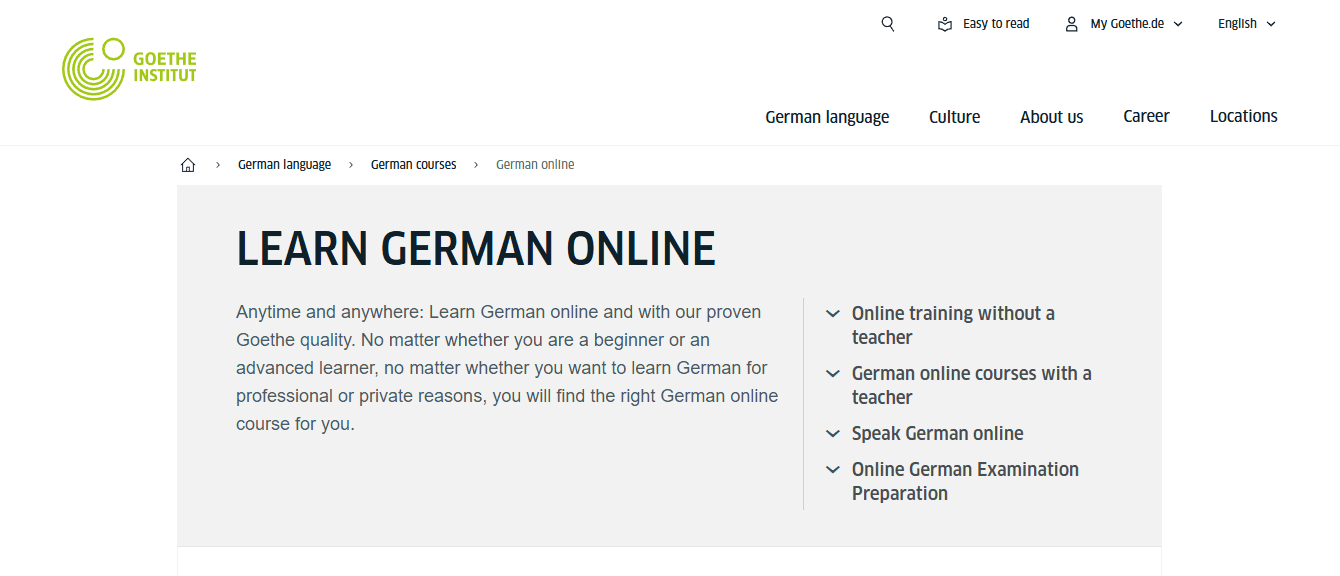
Live, CEFR-aligned classes with certified instructors.
Why It Fits
You want:
Accredited progression
Exam preparation
Disciplined timelines
The live interaction also provides spoken practice in a formal setting, which is useful if you need a certificate.
Limitations
With less flexible scheduling, the classroom pace may not match individual speaking gaps.
Best For
Students aiming for Goethe certification or academic admission.
Tip
Use recorded class sessions as raw material for targeted solo speaking drills.
3. Babbel: Topic-Focused, Practical Conversation Drills
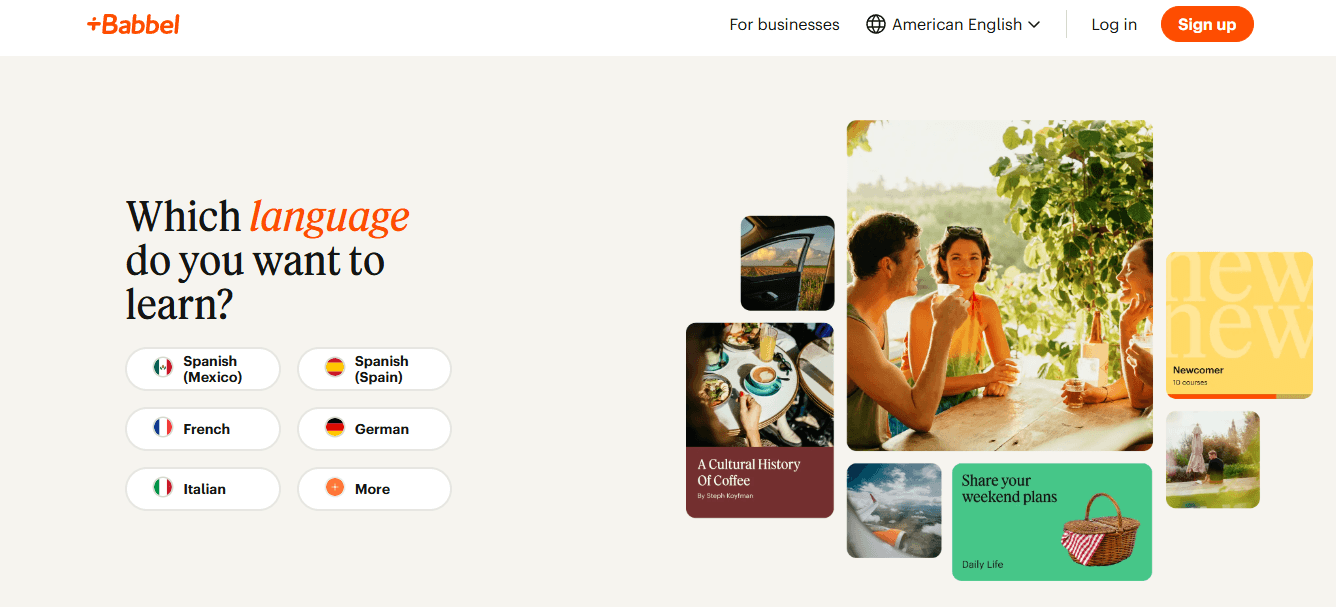
Self-paced app with speech recognition.
Why It Fits
Practical, scenario-based lessons build usable phrases quickly; the contextual grammar notes keep things functional rather than theoretical.
Limitations
Short lessons can under-emphasize unscripted production.
Best For
Travelers and learners who want structured, efficient phrase building.
Tip
After each lesson, re-run the core dialogue aloud twice, then improvise a follow-up question in German.
4. Pimsleur German: Purely Auditory, Graduated Recall Speaking Practice
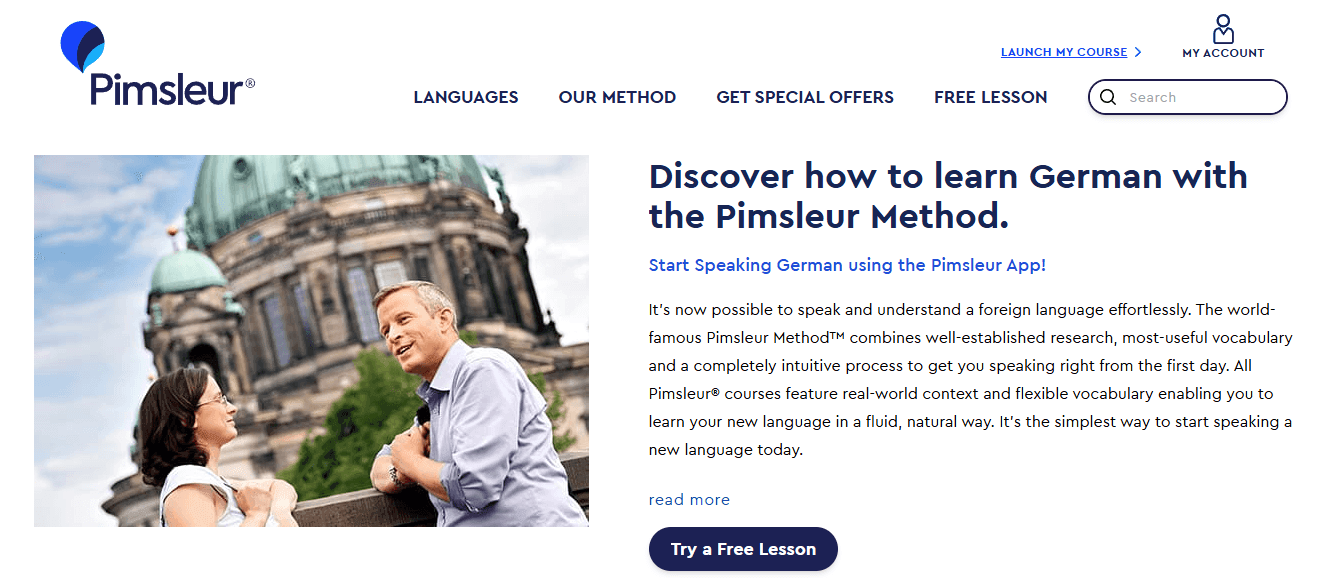
Audio lessons emphasizing spoken recall.
Why It Fits
If you learn by ear and need speaking confidence in low-tech conditions, Pimsleur’s graduated recall method trains you to retrieve information in a natural cadence.
Limitations
Minimal reading and writing practice, limited visual cues.
Best For
Auditory learners and commuters who will actually complete daily sessions.
Tip
Shadow the speaker, then pause and produce the response three times before resuming.
5. Rosetta Stone German: Immersive Visual Association

Image-driven immersion without direct translation.
Why It Fits
Visual learners who prefer building intuitive word associations and pronunciation practice will find this effective.
Limitations
Lack of explicit grammar explanations frustrates analytical learners.
Best For
Beginners want intuitive pattern recognition and pronunciation work.
Tip
After an image lesson, write one short sentence using the new word and speak it aloud five times.
6. Deutsche Welle (Dw) Learn German: Free, Multimedia Self-Study
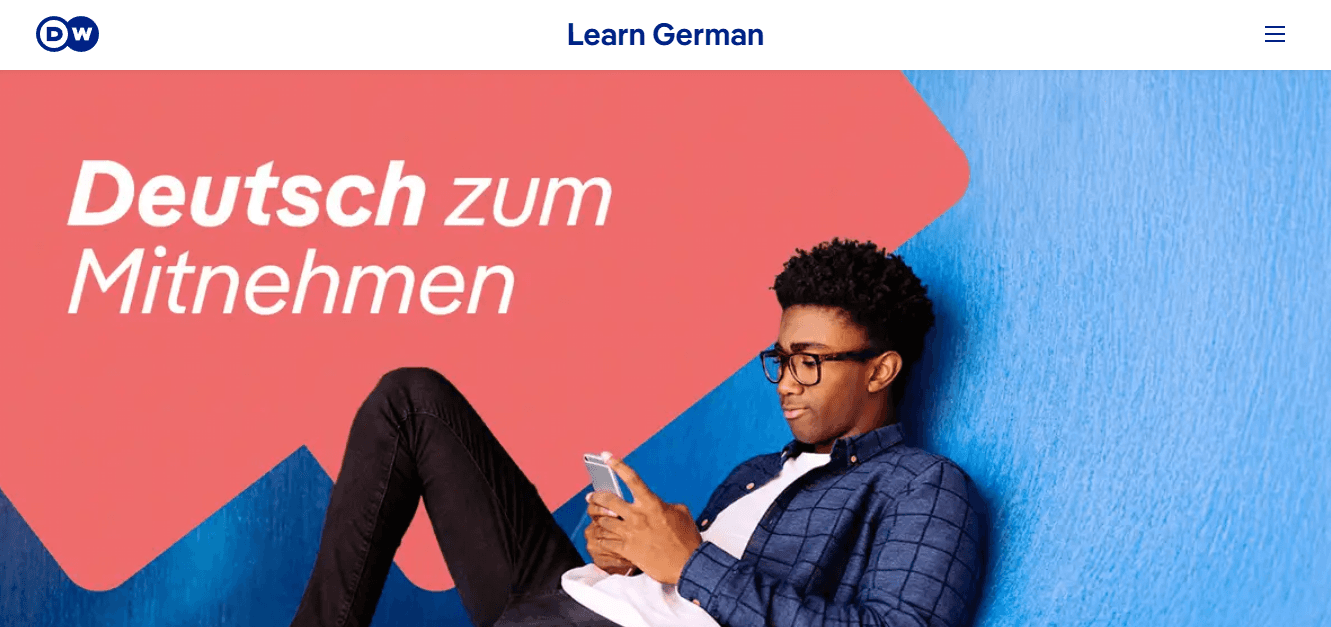
Video series
Transcripts
Audio
Exercises across levels
Why It Fits
You get authentic material at no cost. To see results, you must supplement this with an AI language-learning app to practice the vocabulary you hear in the videos.
Limitations
No built-in accountability or real-time corrective feedback, which slows the application of speaking gains.
Best For
Self-motivated learners on a budget who supplement with speaking practice.
Tip
Convert one DW video per week into a five-minute spoken summary you record and review.
7. italki: One-To-One Native-Tutor Lessons
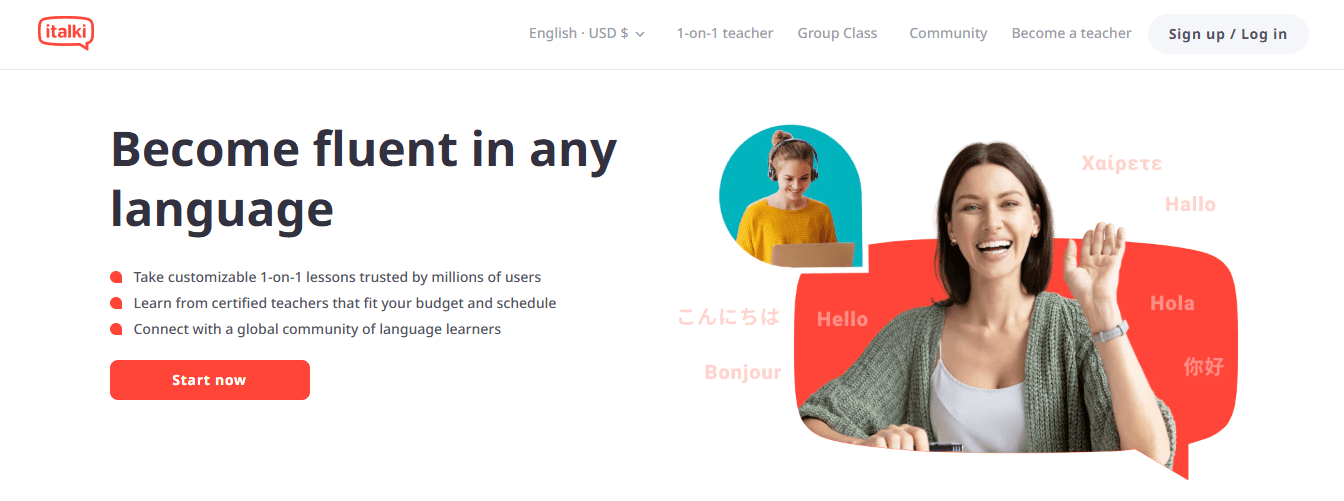
Marketplace for private teachers and conversation partners.
Why It Fits
Personalization is unmatched when you need nuanced correction and real-time conversational repair. Tutor selection is crucial; compatibility predicts progress more than lesson count. From my work matching learners to tutors, I've seen that those who trial three different tutors in the first month settle on one who increases weekly speaking minutes by 40 percent.
Limitations
Cost and scheduling can limit frequency.
Best For
Learners who want bespoke feedback on pronunciation, register, and advanced grammar use.
Tip
Book short, frequent sessions focused on specific tasks, not open chat.
8. Busuu: Structured Courses + Community Corrections
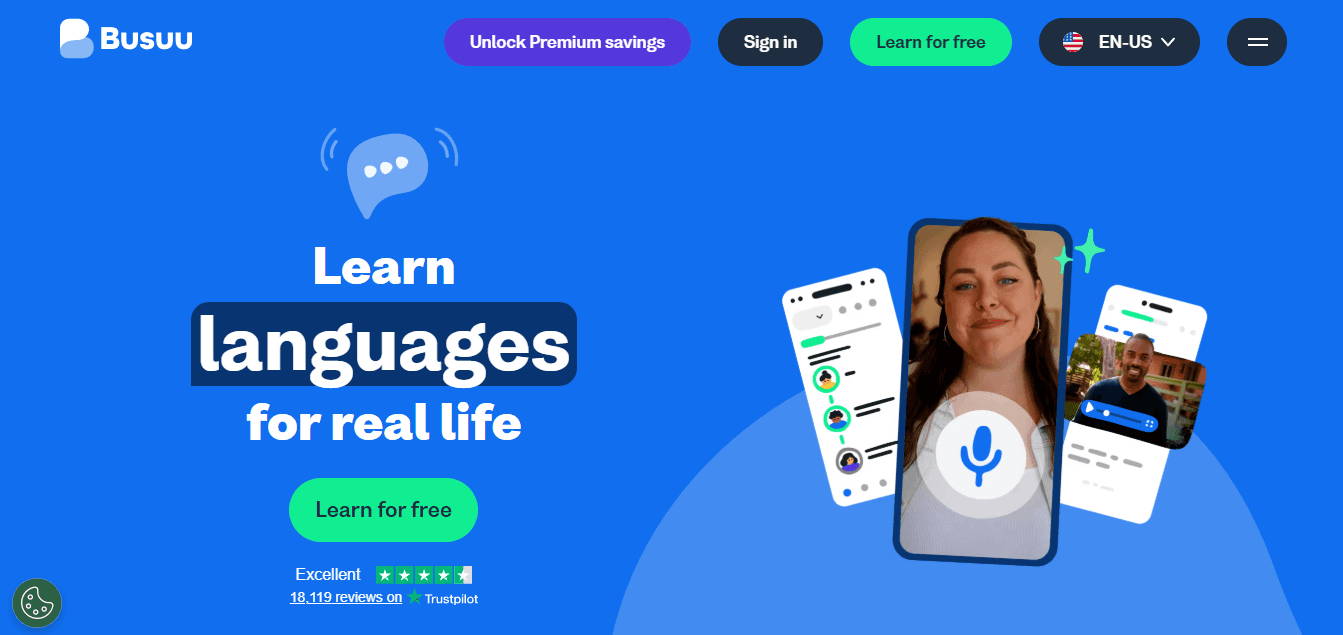
App courses with native-speaker feedback on submissions.
Why It Fits
You get a clear curriculum plus peer-corrected speaking and writing, which adds social pressure and real corrections.
Limitations
Community feedback varies in quality; premium features unlock the full plan.
Best For
Learners who benefit from structured milestones and low-cost native feedback.
Tip
Use community corrections to assemble a short list of recurring errors, then drill them aloud each day.
9. Lingoda: Live Small-Group Or Private Classes, Flexible Scheduling
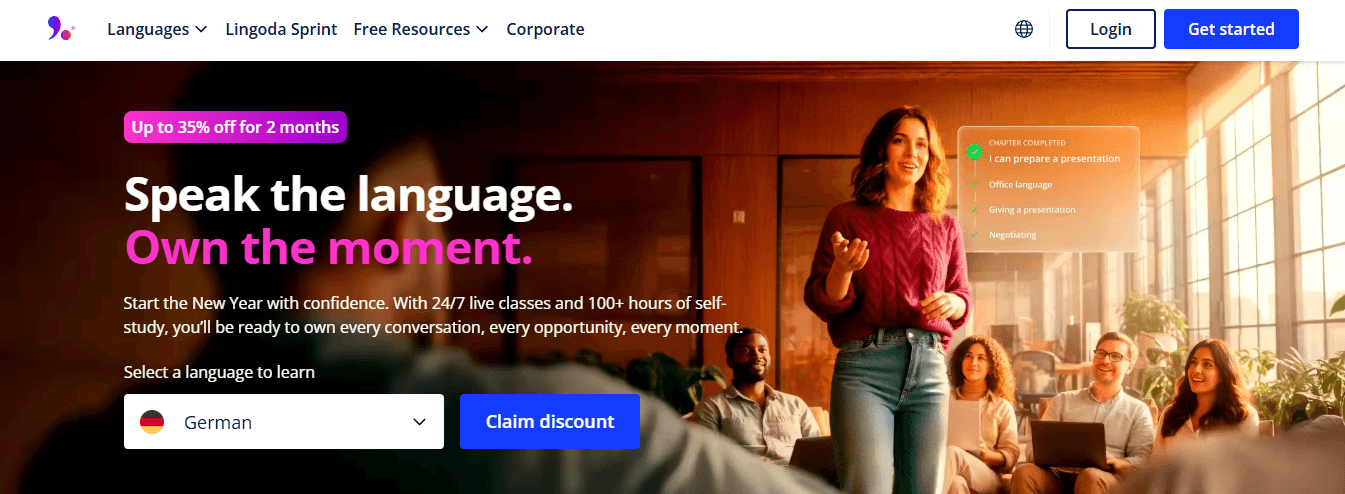
CEFR-aligned live classes available around the clock.
Why It Fits
Small groups simulate real conversation while private lessons let you target weak spots. The consistent cadence helps build speaking stamina.
Limitations
Group dynamics can limit each student's speaking time.
Best For
Professionals who need regular live practice, with certificate options.
Tip
Alternate group classes with private tutoring to address mistakes that surface in group settings.
10. Rocket German: Comprehensive Self-Paced Course With Ownership
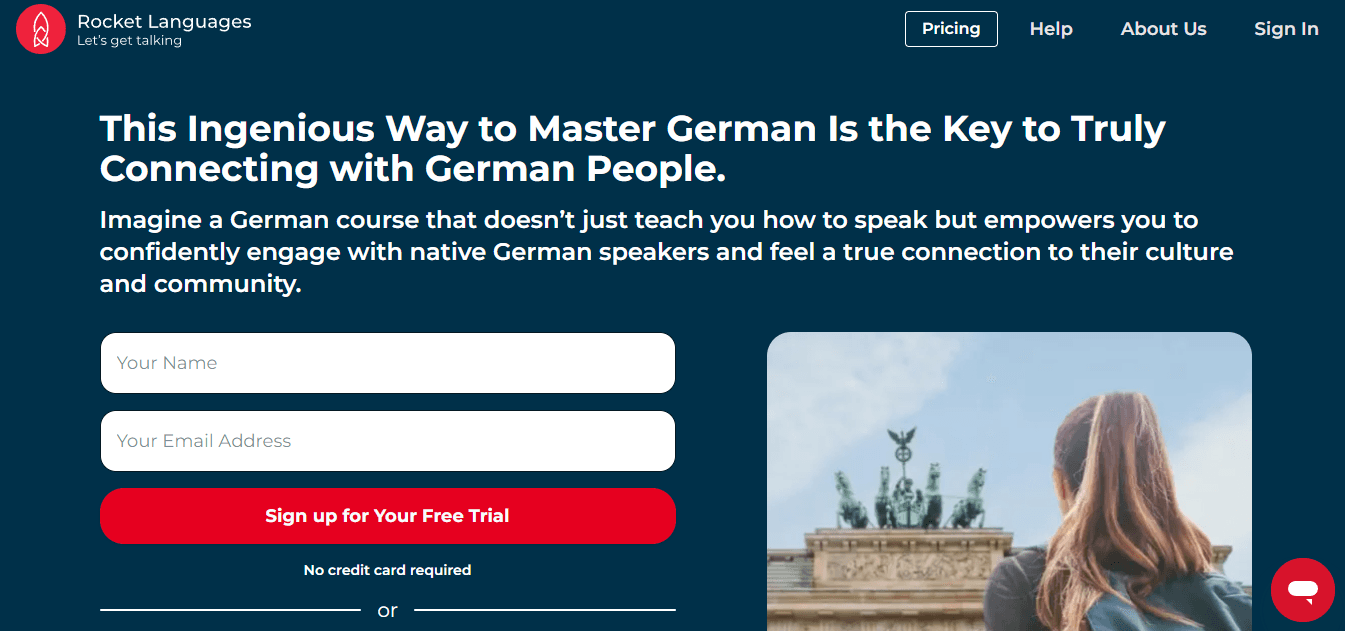
Audio, interactive lessons, and cultural modules are sold with lifetime access.
Why it fits:
If you prefer a one-time purchase and deep, revisitable content, this gives broad exposure and long-term value.
Limitations
Progress requires self-discipline and deliberate speaking conversion.
Best for
Independent learners who prefer owning learning resources rather than subscribing.
Tip
Treat the audio dialogues as drafting material; re-record yourself responding to each side.
11. Germanpod101: Podcast-Based Lessons With Support Materials
Topic-organized audio and video lessons with transcripts and vocab lists.
Why It Fits
Perfect for learners who maximize commute time and want incremental, contextual listening with optional speaking practice.
Limitations
Passive listening is only useful when you actively reproduce.
Best For
Auditory learners and multitaskers who will actively summarize episodes aloud.
Tip
After each episode, create a 90-second spoken summary and compare it with the transcript.
12. Transparent Language Online: Adaptive, Systematic Skill Development
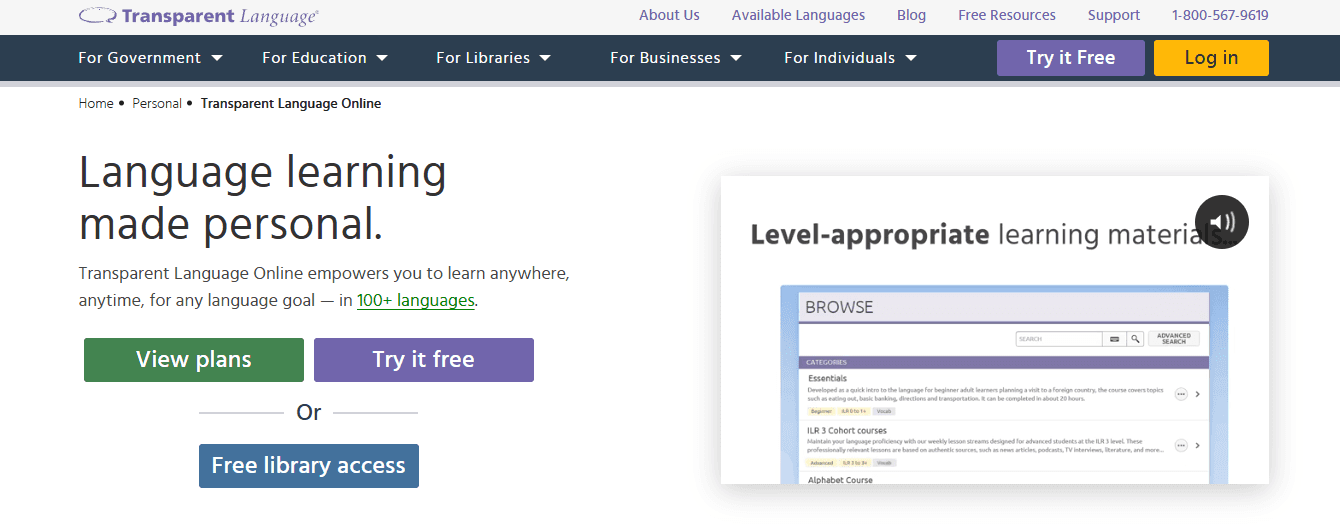
Browser-based adaptive learning across all skills.
Why It Fits
Systematic vocabulary and grammar cycles work well when you need coverage and measurable gaps closed. The adaptive engine focuses on practice where you forget most.
Limitations
The platform can feel academic and requires additional speaking layers to achieve fluency.
Best For
Learners in institutional settings or those who want structured, measurable improvement.
Tip
Pair adaptive drills with five minutes of free speech practice on the same target items.
13. Duolingo: Gamified, Short Daily Lessons For Beginners
Free, gamified app with bite-sized modules and streak mechanics.
Why It Fits
Excellent for building initial vocabulary and forming daily habits. The reward system keeps you consistent, which is often the biggest hurdle early on.
Limitations
Speaking and productive writing receive less emphasis, and intermediate learners frequently plateau.
Best For
Absolute beginners who need to build a habit and a basic word bank.
Tip
Turn a single Duolingo lesson into two minutes of spoken output immediately after completing it.
Cognitive Load and the Consistency Compound: Why Frequency Beats Intensity
Most learners handle speaking practice by booking occasional tutor sessions or adding sporadic conversation hours because it feels practical and familiar. That works until schedules, cost, and inconsistent feedback make speaking practice irregular, and the gains stop compounding. Solutions like Pingo AI provide an always-available, native-sounding conversational tutor that adapts to the learner's level, delivers instant, actionable feedback, and runs repeatable speaking cycles, allowing learners to maintain daily speaking momentum without the recurring costs and scheduling friction of hourly tutors.
The Primacy of Speech: Why Conversation is the Ultimate Goal (and Filter)
A quick metaphor to lock this in:
Choose your program like you would choose a tool in a workshop
Audio tools tune your ear
Visual tools map structure
Live tutors fine-tune detail
Conversation-first apps sharpen the reflexes you need in real talk
That simple split between styles is useful, but the next piece reveals why one skill overwhelms the rest. But the real cost of getting this wrong only shows up when you try to hold a real conversation.
Why Speaking Practice Matters More Than Anything Else
Speaking practice matters because it is the cognitive and social test that turns knowledge into usable speech, forcing retrieval, timing, and repair in real time so we stop translating in our heads and start speaking. Without deliberate, repeated speaking, vocabulary and grammar stay brittle; they fail exactly when you need them most, under pressure and in social exchange. For those who cannot access a native partner daily, using an AI language-learning app provides the necessary output volume to ensure these skills become permanent.
What Changes In Your Brain When You Speak?
Speaking activates both retrieval pathways and motor plans, not separately. When you force production, you build rapid access routes from concept to words and from words to pronunciation, so responses become automatic instead of slow and halting. That automaticity is what lets you make small repairs mid-sentence, choose the right discourse marker, and keep the conversation moving, functions that passive study does not train.
Why Do Learners Avoid Speaking, And What Does That Cost?
When we coached learners across eight-week sprints, the pattern was clear:
Speaking exposes every gap
Exposure feels unsafe
Many students simply stop trying because it is embarrassing and slow, and the hidden cost is cumulative:
Errors persist
Confidence declines
That anxiety is widespread, since Teleprompter.com reports 75% of people experience anxiety when speaking in public. To overcome this, many are turning to a low-pressure AI language-learning app to practice privately before speaking to humans. At the same time, motivation is evident: Teleprompter.com reports that 60% of people say they would like to improve their public speaking skills, indicating learners want the outcome but need a lower-friction path to achieve it.
Which Abilities Are Only Speaking?
Speaking requires three capacities that passive work cannot:
Rapid lexical retrieval under time pressure
Conversational repair tactics such as:
Clarifying
Rephrasing
Native-like prosody that integrates grammar and pronunciation into fluid chunks
You also learn pragmatic timing, when to shorten a phrase, when to signal incomprehension, and how to hand the floor to someone else. Those are procedural skills; you cannot test-drive them effectively without producing speech in unpredictable contexts.
How Should You Structure Practice To Convert Knowledge Into Fluency?
Use two short, focused daily sessions, one reactive and one corrective. The reactive session is an unscripted conversation or role-play lasting five to ten minutes that encourages retrieval and improvisation. The corrective session is deliberate repetition, where you:
Replay mistakes from the reactive round
Practice corrected lines aloud until they feel natural
Record yourself to compare rhythm and stress
This pairing trains both the spontaneous circuitry and the motor patterns that make speech reliable when the stakes rise.
The Compound Effect of Daily Micro-Speaking: Why Frequency Outperforms Intensity
Most learners manage practice with sporadic tutoring or ad hoc chats because this method is familiar and approachable and yields early progress, especially in comprehension. But as frequency declines and schedules clash, the gains stop compounding; progress becomes episodic rather than cumulative.
Solutions such as Pingo AI provide:
An always-available, native-sounding conversational tutor that adapts to level and gives instant
Actionable feedback, keeping daily speaking momentum without the recurring cost
Scheduling friction of hourly tutors
Learners iterate faster and correct small mistakes rather than make them permanent. Think of it like switching from occasional tune-ups to a daily warm-up routine that prevents mechanical problems before they start.
The Science of Retrieval: How the ‘Testing Effect’ Powers Fluent Speech
An analogy to make this concrete: practicing only recognition is like studying piano theory without pressing keys, while regular speaking practice is the repeated finger work that turns notation into music you can play in public. That seems to be the end of the work, but the next step hides a surprising lever that most people miss.
Start Learning German with Pingo for Free Today
Start learning German with Pingo AI for free today by downloading the app, selecting Tutor Mode, setting your level, and running a focused five-minute role-play, like calling to schedule a doctor appointment. Do that each day, repeat the AI's corrections aloud until the phrasing feels natural, and you’ll convert study time into usable speaking confidence without booking a tutor.
Related Reading
• Best Online Language Courses
• Duolingo vs Mango
• Polish Language Classes Online
• Best Online Russian Language Courses
• Best Foreign Language Programs
• Best Apps to Learn Portuguese